




-

"Very nice Posters. The quality is amazing and we received it very quickly !"
-

"A shop to visit absolutely. Huge selection of posters. We spent more than an hour there !"
-

"Perfect to find gift. Price are very good. An they can frame and pack it on site"


About the Artist
Gustav Klimt was a central figure in Viennese modernism and a cofounder of the Vienna Secession, a movement that challenged academic traditions and embraced new artistic expressions. Around 1908, Klimt entered his renowned Golden Phase, marked by the use of gold leaf and intricate patterns inspired by Byzantine mosaics and the decorative arts of his era.
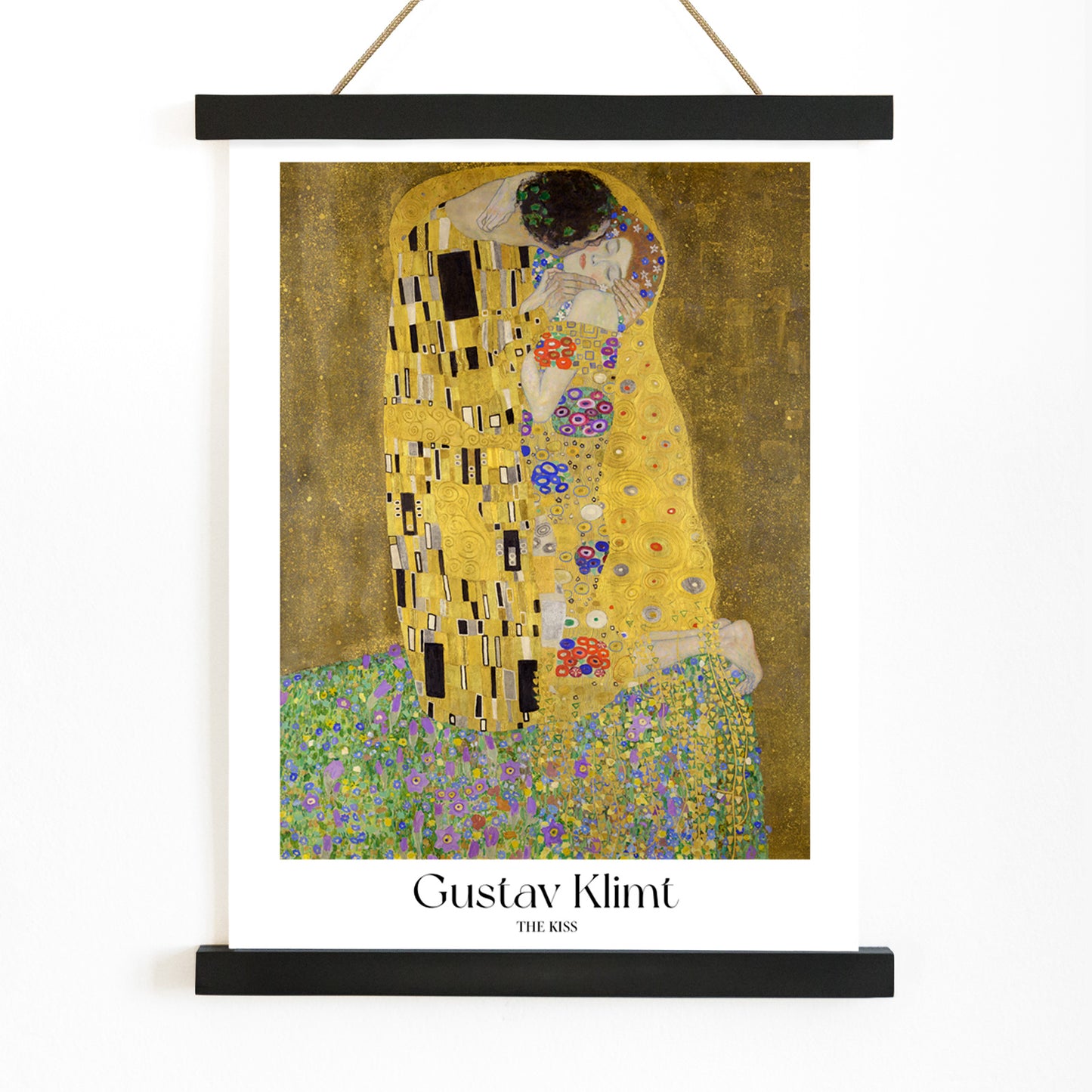
The Kiss stands as one of Klimt's most celebrated works, embodying his vision of art as a bridge between sensuality and ornamentation. It reflects the spirit of early twentieth-century Vienna, where artists sought to redefine beauty and intimacy for a changing world.
The Artwork
Created during Vienna’s cultural renaissance, The Kiss emerged as a symbol of love and unity at a time when artists were exploring new ways to express emotion. Rather than depicting a specific story, Klimt distilled a universal moment of affection, transforming a private embrace into an enduring emblem of devotion and surrender.
First exhibited in 1908, the painting quickly became an icon of the Secession movement, admired for its ability to elevate personal tenderness into a work of decorative art with lasting emotional resonance. Its influence continues to shape how intimacy is portrayed in modern art.
Style & Characteristics
The composition centers on a couple kneeling in a close embrace, set against a flattened, shimmering gold background. Their garments are richly adorned with geometric and organic motifs in gold, black, and white, while the ground beneath them blooms with touches of green and violet flowers.
Klimt contrasts the soft, naturalistic rendering of faces and hands with highly stylized, mosaic-like patterns, creating a harmonious tension between realism and abstraction. The overall effect is both radiant and serene, inviting viewers to appreciate the artwork’s intricate details and luminous atmosphere.
In Interior Design
This iconic art print introduces warmth and a striking focal point to living rooms, bedrooms, or entryways, especially in spaces that blend modern furnishings with vintage or historic accents. It pairs beautifully with brass, walnut, and creamy textiles, while a black frame can highlight the graphic contrasts within the design.
For a cohesive gallery wall, it complements classic art prints and sits elegantly alongside works by famous artists. To enhance its golden glow, consider pairing it with yellow-toned wall art and accents of deep green or violet.