




-

"Very nice Posters. The quality is amazing and we received it very quickly !"
-

"A shop to visit absolutely. Huge selection of posters. We spent more than an hour there !"
-

"Perfect to find gift. Price are very good. An they can frame and pack it on site"


About the Artist
Hilma af Klint was a Swedish painter whose pioneering abstractions predated the mainstream acceptance of non-figurative art. Trained in academic traditions but guided by a deep spiritual quest, she developed a unique symbolic language that anticipated later developments in modernism. Today, she is recognized as a foundational figure among famous artists who expanded the expressive potential of fine art beyond realism.
Af Klint’s artistic journey was shaped by her involvement in spiritualist circles and her belief that art could reveal hidden dimensions of existence. Her work stands at the intersection of mysticism and early scientific exploration, blending disciplined technique with visionary insight. This approach continues to inspire those interested in the evolution of abstract and esoteric art.
The Artwork
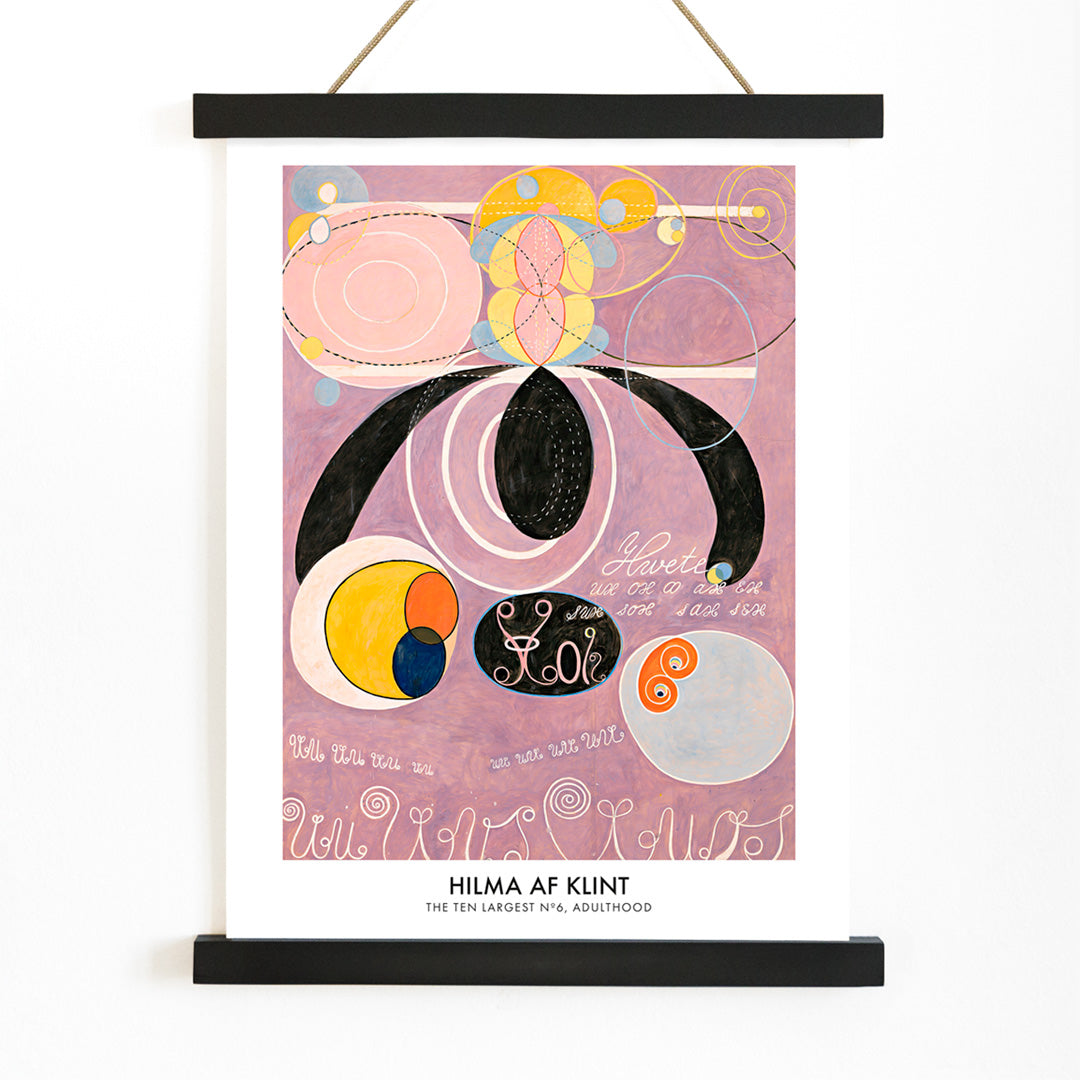
The Ten Largest, No. 6 is part of a groundbreaking 1907 series that explores the stages of human life and spiritual development. Conceived as a visual meditation rather than a depiction of the external world, the piece invites viewers to reflect on themes of growth, transformation, and the unfolding of consciousness. Created during a period of intense artistic experimentation, it embodies af Klint’s search for a visual language capable of expressing inner realities.
This work emerged at a time when artists across Europe were seeking new ways to represent the unseen forces shaping human experience. For af Klint, painting became a tool for mapping the invisible, offering a contemplative journey into the mysteries of existence—a perspective that continues to resonate with admirers of abstract and esoteric art.
Style & Characteristics
This abstract poster features swirling organic forms, reminiscent of petals, spirals, and symbolic emblems, arranged in a harmonious and rhythmic composition. The palette is dominated by soft purples and pinks, accented with touches of warm yellow and defined by darker linear elements that provide structure. The layered surface creates a sense of depth and movement, as if the symbols are gently floating within the space.
The overall mood is contemplative and uplifting, with a playful sense of order. The artwork’s pastel tones and fluid shapes make it well-suited to a range of interiors, appealing to those who appreciate the symbolic richness of early modernist abstraction.
In Interior Design
As a large-scale art print, this piece serves as a striking focal point in living rooms, bedrooms, or creative studios, especially where a serene yet dynamic atmosphere is desired. Its gentle colors complement Scandinavian and minimalist interiors, allowing the artwork to breathe amid pale woods and neutral textiles. The pastel hues also integrate seamlessly into contemporary gallery wall arrangements.
To create a cohesive look, echo the artwork’s purples and pinks in decorative accents such as cushions or ceramics, and introduce muted yellow details for warmth. A clean frame and generous matting enhance its presence, preserving the meditative quality that defines af Klint’s vision in everyday spaces.