




-

"Very nice Posters. The quality is amazing and we received it very quickly !"
-

"A shop to visit absolutely. Huge selection of posters. We spent more than an hour there !"
-

"Perfect to find gift. Price are very good. An they can frame and pack it on site"


About the Artist
Benjamin Fawcett was a British engraver and printmaker renowned for his contributions to nineteenth-century natural history illustration. Collaborating with leading ornithologists, Fawcett played a pivotal role in making scientific knowledge accessible to a broad audience through beautifully detailed printed plates. His work coincided with a period when illustrated books and portfolios were essential tools for education and discovery.
The Artwork
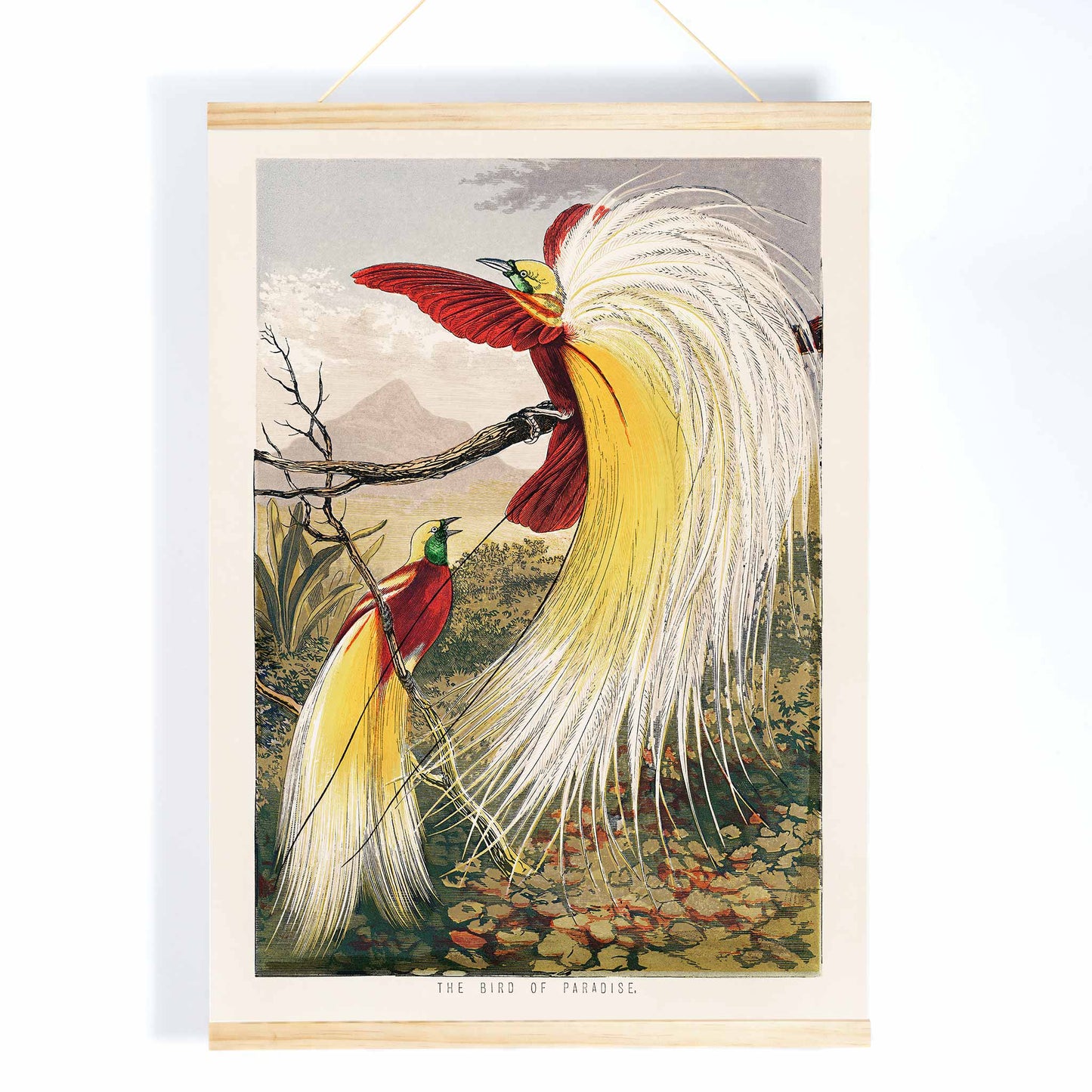
Created in 1862, this Bird of Paradise print emerged during a time when European fascination with exotic species was fueled by exploration and the expansion of museum collections. Such images were valued not only for their rarity but also for their role in documenting and classifying new species, helping to shape public understanding of the natural world. The print reflects the Victorian ideal of merging scientific accuracy with visual allure, serving both as a reference and a source of inspiration for naturalists and collectors alike. For those interested in similar works, it complements other pieces in the science and animals collections.
Style & Characteristics
This ornithological print features a precise, specimen-style composition typical of nineteenth-century bird studies. The bird of paradise is rendered in profile, perched on a branch, with its striking plumage and elongated tail feathers clearly displayed. Fine linework and subtle shading give the feathers a layered, tactile quality, while the palette includes vivid yellows, greens, and deep reds that capture the bird’s exotic beauty. The clean, white background emphasizes the subject, creating a refined and focused presentation that highlights both scientific detail and decorative elegance.
In Interior Design
This vintage bird print brings a touch of natural history and color to living rooms, studies, or hallways, especially in spaces that blend classic and contemporary elements. Its archival feel pairs well with botanical accents, natural woods, and simple frames from the frames collection. To create a cohesive look, echo the artwork’s colors with soft greens or warm reds in textiles and accessories, allowing the print to serve as a sophisticated focal point within a curated gallery wall or as a standalone piece.