




-

"Very nice Posters. The quality is amazing and we received it very quickly !"
-

"A shop to visit absolutely. Huge selection of posters. We spent more than an hour there !"
-

"Perfect to find gift. Price are very good. An they can frame and pack it on site"


About the Artist
Jean François Champollion was a pioneering French scholar whose decipherment of hieroglyphic writing in the early nineteenth century established the foundations of modern Egyptology. His passion for ancient languages and cultures transformed how Europe understood the art, beliefs, and history of Egypt, moving these subjects from the realm of myth into scholarly study and museum collections.
Champollion’s legacy endures in the visual documentation of Egyptian antiquities, which continues to inspire collectors interested in the intersection of history and art. This print is a natural fit alongside other works in our science and famous artists collections.
The Artwork
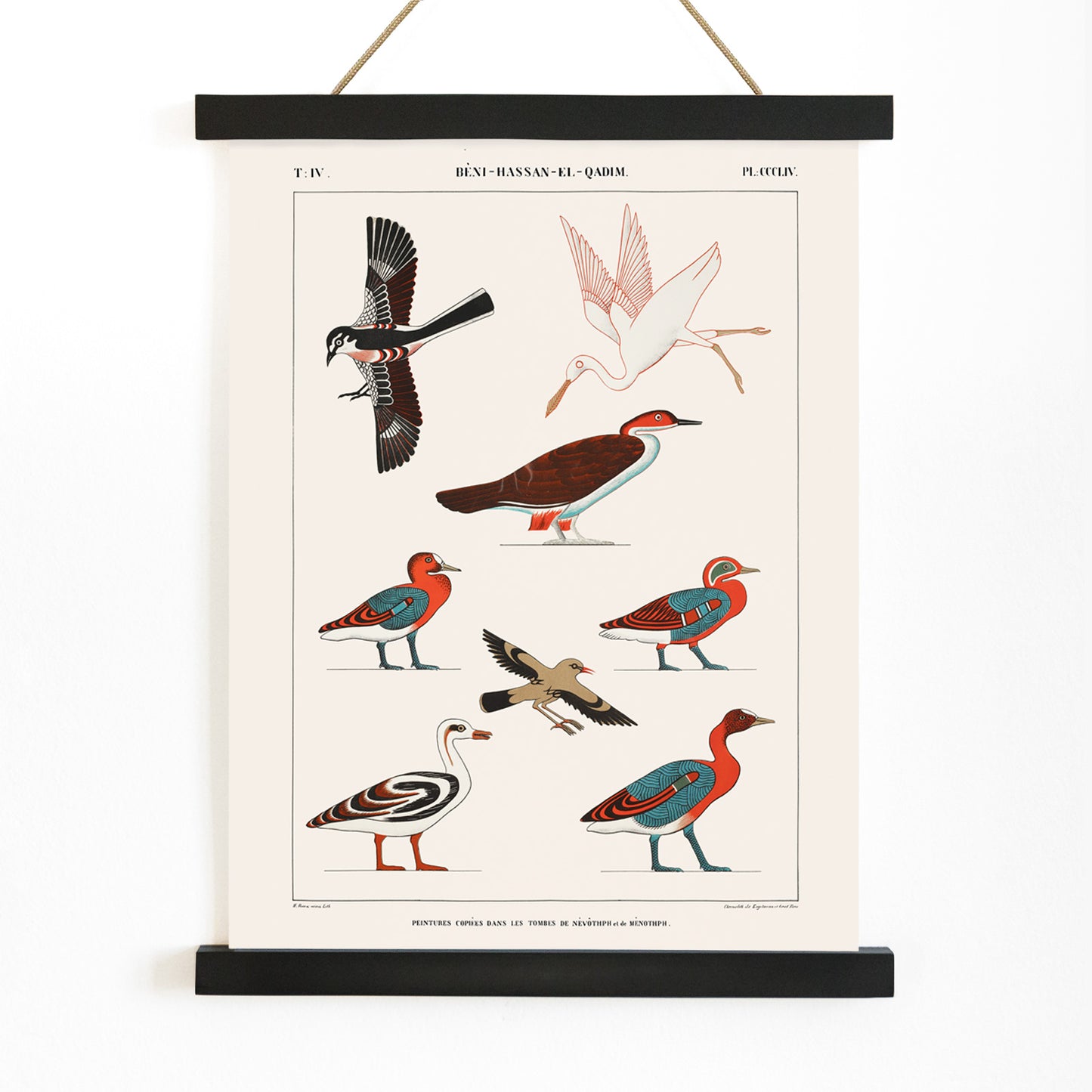
Published in 1840, this plate was created as part of the effort to systematically record the art and iconography found in Egyptian tombs, specifically those of Nevoethph and Menothph. Such documentation was crucial for preserving the visual heritage of ancient Egypt at a time when archaeological discoveries were rapidly expanding European knowledge of the ancient world. The birds depicted here represent not only the natural environment but also the symbolic language of protection and renewal that permeated Egyptian funerary art.
This work reflects the nineteenth-century drive to catalog and study the past, bridging the sacred traditions of ancient Egypt with the emerging scientific approach of modern scholarship.
Style & Characteristics
The composition features a series of birds rendered in crisp profile, each spaced apart to allow for easy comparison. The forms are stylized and simplified, emphasizing clear outlines and distinctive patterns in keeping with the conventions of Egyptian wall painting. The palette is striking, with bold reds and blues set against deep black contours and a pale background, creating a vivid yet balanced effect.
This graphic clarity lends the print a timeless quality, blending the decorative elegance of ancient art with a modern sense of order. The result is a visually engaging piece that stands out in both classic and contemporary interiors.
In Interior Design
This vintage print brings a sense of history and curiosity to spaces such as offices, reading nooks, or hallways. Its orderly arrangement and vibrant colors make it a compelling addition to gallery walls, especially for those drawn to travel, archaeology, or animal motifs, as seen in our oriental collection.
Pairing it with black or wood frames and echoing its colors in surrounding decor can enhance its presence. Its blend of ancient subject matter and graphic style suits eclectic, mid-century, and minimalist interiors, offering a sophisticated alternative to purely naturalistic animal art.