




-

"Very nice Posters. The quality is amazing and we received it very quickly !"
-

"A shop to visit absolutely. Huge selection of posters. We spent more than an hour there !"
-

"Perfect to find gift. Price are very good. An they can frame and pack it on site"


About the Artist
Kobayashi Kiyochika, active in late nineteenth-century Tokyo, was a pivotal figure in Meiji-era ukiyo-e. His work captured the transformation of Japan as it modernized, blending traditional woodblock techniques with new urban subjects. Kiyochika became renowned for his atmospheric scenes that explore the interplay of light, weather, and the evolving cityscape.
His prints often reflect the tension and harmony between old Edo and modern Tokyo, documenting a city in flux. For those interested in the intersection of history and innovation in Japanese art, his work offers a unique perspective on a rapidly changing era, making it a valued addition to refined Japanese and Asian art prints collections.
The Artwork
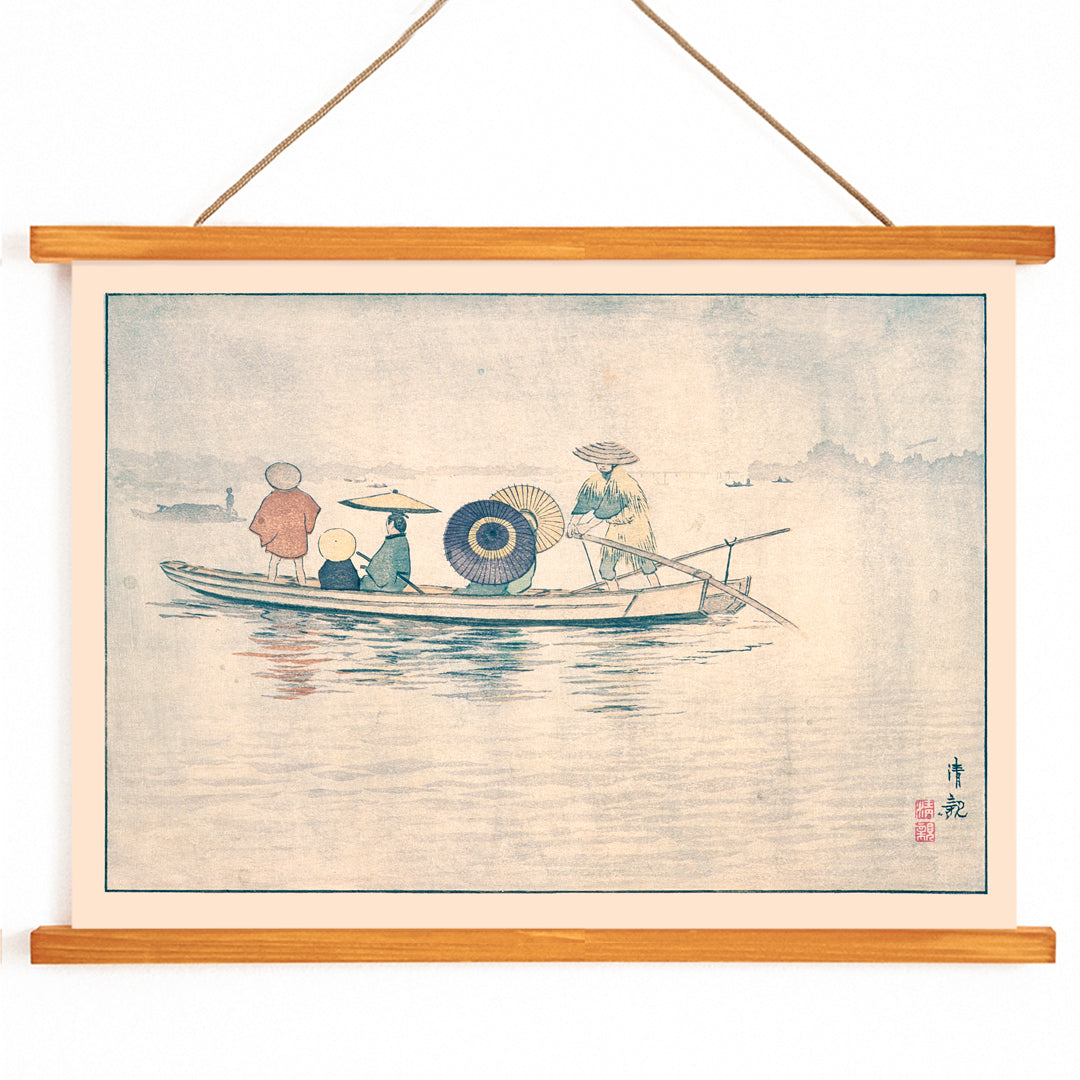
This depiction of the Ōkawa River Bridge captures a moment in Meiji-period Tokyo, when infrastructure like bridges played a vital role in connecting expanding neighborhoods. The scene is set during rainfall, evoking the daily rhythms of city life and the contemplative mood brought on by inclement weather.
Created at a time when Tokyo was embracing both tradition and progress, the artwork reflects how ordinary places and moments—such as a rainy crossing—could become poetic subjects. It stands as a quiet record of urban transformation, inviting viewers to pause and reflect on the passage of time.
Style & Characteristics
The composition features a strong diagonal bridge spanning the river, drawing the viewer's gaze into the distance. Delicate linear marks evoke falling rain, while the figures on the bridge are rendered as subtle silhouettes, emphasizing atmosphere over detail.
Dominated by cool blue hues, the print is softened by the warm tone of the paper and gentle highlights that shimmer on the water’s surface. The overall effect is tranquil and meditative, with layered shading and reflections creating a sense of depth. Those who appreciate blue tone wall decor and classic landscape scenes will find its restraint especially appealing.
In Interior Design
This vintage print brings a sense of calm to living rooms, entryways, or offices, offering visual serenity without starkness. Its rainy, reflective mood complements Japandi, minimalist, and contemporary interiors, and it can serve as a grounding piece in a gallery wall arrangement.
Pair it with matte black or natural oak frames and textiles in navy, stone, oatmeal, or muted rust. It also harmonizes with other landscape art prints, balancing urban themes with contemplative elements of water and weather.