




-

"Very nice Posters. The quality is amazing and we received it very quickly !"
-

"A shop to visit absolutely. Huge selection of posters. We spent more than an hour there !"
-

"Perfect to find gift. Price are very good. An they can frame and pack it on site"


About the Artist
August Allebé was a Dutch painter and draftsman active in the late 19th century, admired for his sensitive observation and tonal restraint. As a leading figure in Dutch art education, he guided a generation of artists during a period when academic tradition met the rise of naturalism. His influence extended beyond his own work, shaping the direction of modern Dutch drawing and painting.
Collectors interested in 19th-century European art will find in Allebé a thoughtful balance between disciplined technique and an openness to the fleeting moods of nature.
The Artwork
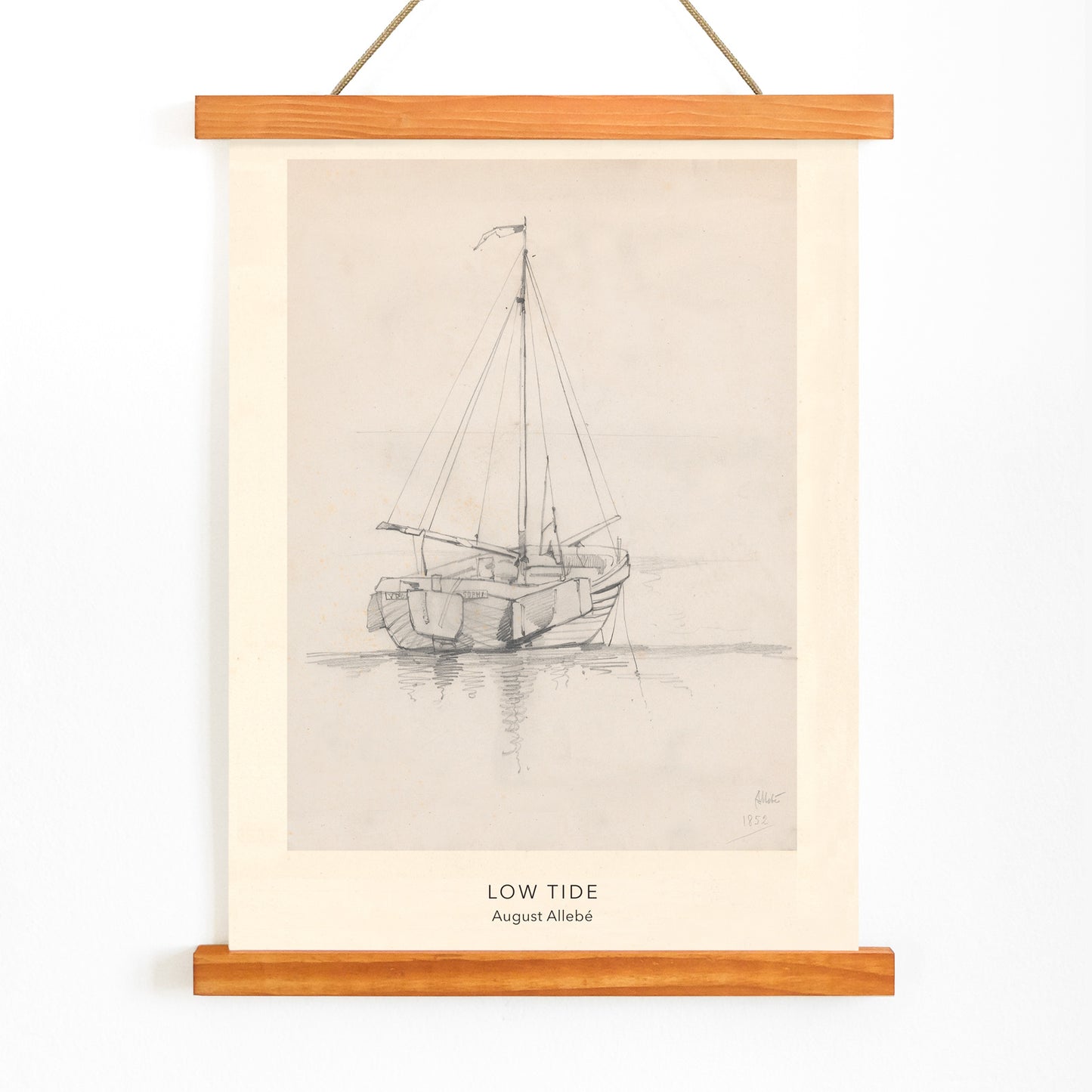
Created in the 1870s, Low Tide captures a quiet moment on the Dutch coast, reflecting the daily realities of maritime communities. At a time when the rhythm of life was closely tied to the sea, such scenes spoke to the patience and adaptability required by fishermen and sailors. Rather than dramatizing the ocean, Allebé chose to depict the subtle pause when the tide is out and boats rest on the exposed shore, highlighting the contemplative side of coastal existence.
This drawing resonates with those who appreciate understated maritime themes and the poetry of everyday life by the water. For more on related subjects, browse our sea and ocean prints collection.
Style & Characteristics
The work is rendered in delicate graphite, with fine lines and gentle shading that evoke the soft light and open air of the shoreline. The composition is airy and minimal, dominated by whites and layered greys, which lend a sense of calm and spaciousness. Allebé’s technique emphasizes subtle tonal shifts rather than bold contrasts, inviting close observation and a meditative mood.
This restrained approach makes the print ideal for those who favor minimal, sketch-like vintage art. Discover similar aesthetics in our grey wall art and black and white prints.
In Interior Design
Low Tide is well suited to interiors that value tranquility and openness, such as serene bedrooms, light-filled living rooms, or focused workspaces. As a vintage sailboat art print, it complements Scandinavian, Japandi, coastal, and classic decor, especially when paired with pale woods and matte ceramics.
It works beautifully against off-white or soft stone walls, and its quiet contrasts can be echoed in charcoal accents or navy textiles. For a cohesive look, consider displaying it within a gallery wall of classic art and pairing it with understated frames.