




-

"Very nice Posters. The quality is amazing and we received it very quickly !"
-

"A shop to visit absolutely. Huge selection of posters. We spent more than an hour there !"
-

"Perfect to find gift. Price are very good. An they can frame and pack it on site"


About the Artist
Jean Benjamin Godefroy was a French engraver active in the early nineteenth century, renowned for his botanical plates that combined scientific observation with refined artistry. His work emerged during a period when botany was gaining popularity both as a scientific discipline and a genteel pursuit, making botanical prints essential for education and appreciation.
This vintage botanical print is a natural fit within our botanical wall art collection, appealing to those who value historical illustration and the legacy of natural history art.
The Artwork
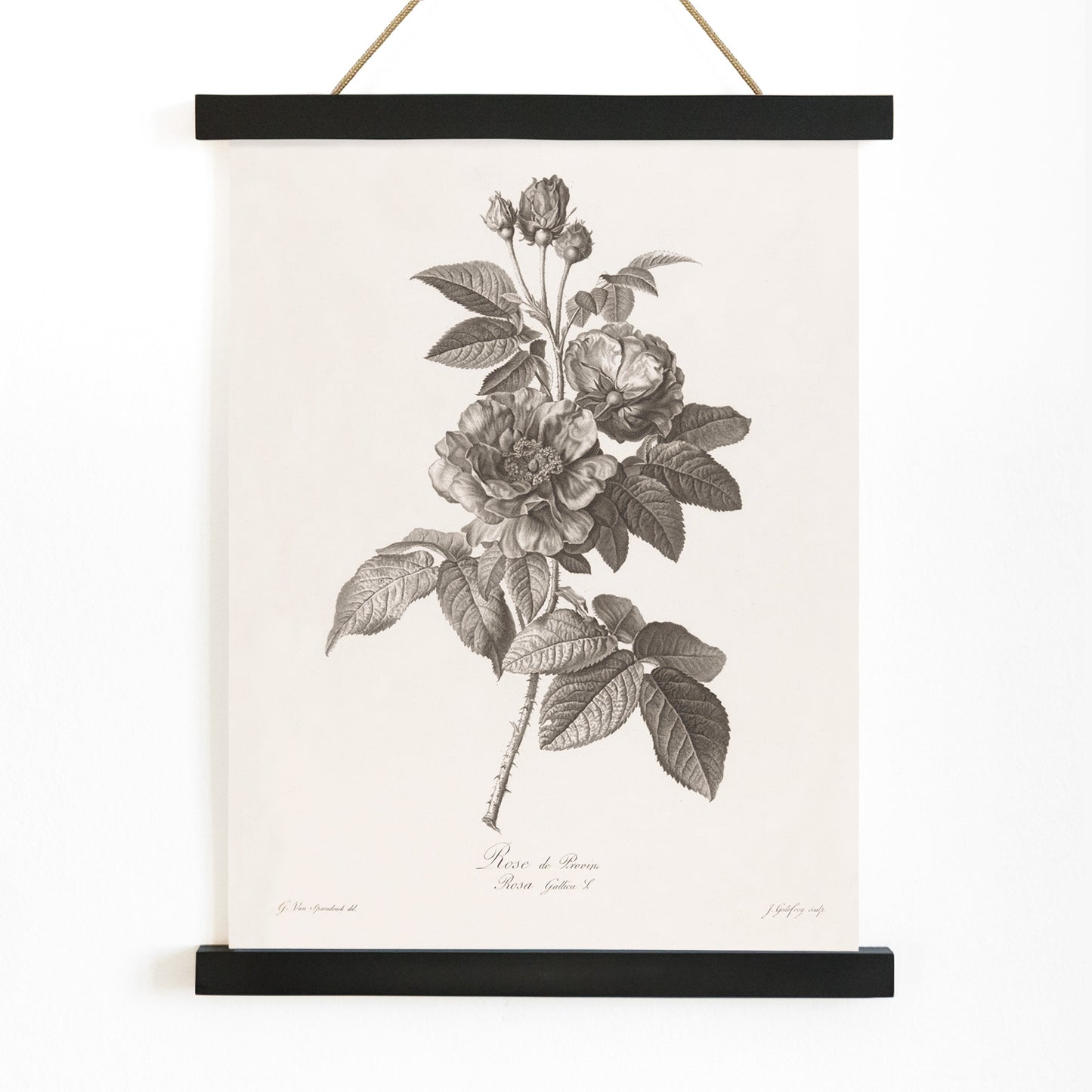
The Rose de Provins, depicted here, refers to a storied variety of garden rose long prized in European horticulture. In 1819, such engravings played a vital role in the spread of botanical knowledge, helping gardeners and botanists identify and classify plants. This print reflects the era's fascination with cataloguing nature and the cultural significance of roses in gardens and apothecaries.
Today, it stands as a testament to the early 1800s, when detailed botanical plates brought the wonders of cultivated blooms into homes and libraries, preserving both scientific insight and the romance of the garden.
Style & Characteristics
The artwork presents a single rose specimen with ample negative space, characteristic of nineteenth-century botanical illustration. Fine engraved lines articulate the petals, leaves, and stems, while subtle hand-coloring lends gentle pinks and greens to the flower and foliage.
The pale background and restrained palette create a calm, archival atmosphere, allowing the rose to stand out with clarity. This vintage print balances scientific accuracy with a sense of quiet elegance, making it a timeless example of floral art. For more refined compositions, explore our white wall art and classic art selections.
In Interior Design
This rose botanical print brings a touch of natural history to bedrooms, studies, or living spaces where subtlety is desired. Its light margins and delicate colors suit minimalist, Scandinavian, and traditional interiors, pairing well with soft textiles and neutral tones.
For a harmonious display, combine it with other botanical prints or keep the palette serene with whites and gentle greens. It is especially appealing to gardeners, botanists, and admirers of antique floral illustration.