




-

"Very nice Posters. The quality is amazing and we received it very quickly !"
-

"A shop to visit absolutely. Huge selection of posters. We spent more than an hour there !"
-

"Perfect to find gift. Price are very good. An they can frame and pack it on site"


About the Artist
Pierre-Joseph Redouté was a leading botanical illustrator of the late eighteenth and early nineteenth centuries, celebrated for uniting scientific accuracy with the refinement of fine art. Working in Paris at the height of European plant collecting, he produced plates that served both botanists and the cultured salons that prized botanical imagery.
His work remains a reference point for collectors of famous artists and for anyone seeking a vintage botanical print that feels both scholarly and poetic.
The Artwork
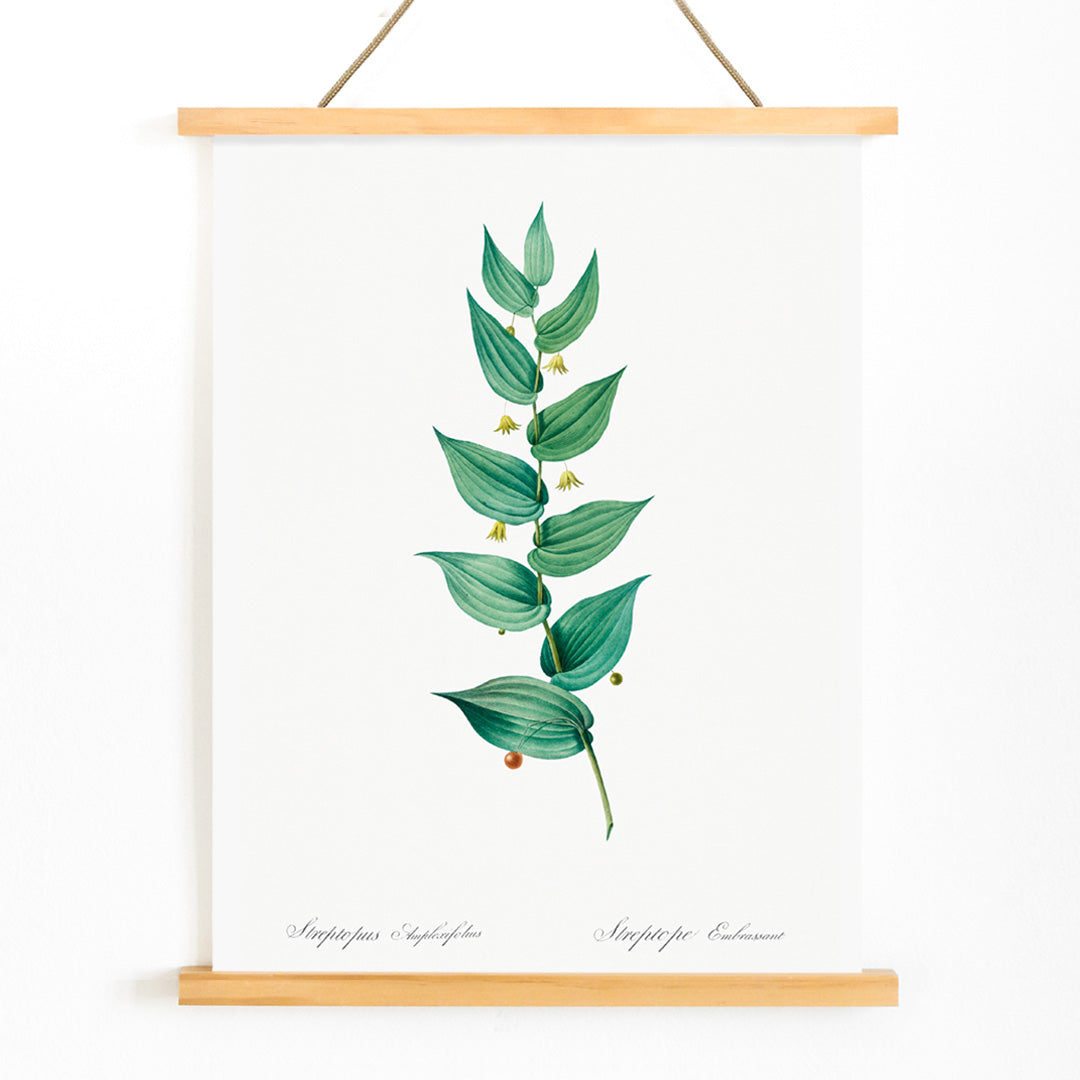
Twistedstalk, dated 1805, was created during a period when botanical illustration played a vital role in cataloguing and sharing plant knowledge across Europe. At a time before photography, such prints were essential for botanists, gardeners, and scholars to identify and compare species accurately. Redouté’s careful documentation reflects the Enlightenment-era pursuit of scientific understanding, while also elevating everyday plants to objects of beauty and study.
This artwork represents the intersection of science and art, offering a glimpse into the world of early nineteenth-century botanical exploration and the desire to bring the wonders of nature into both academic and domestic spaces.
Style & Characteristics
The composition is spare and focused, presenting the twistedstalk plant as a complete specimen with arching green leaves and delicate, hanging white blossoms. Fine outlines and controlled shading describe the plant’s form with clarity, while the subtle gradations of green stand out against the light background. The small, pale flowers provide a gentle contrast, adding a sense of freshness and delicacy to the print.
The overall mood is serene and studious, with a harmonious balance that makes it ideal for a fine art print. The restrained palette and precise rendering evoke a sense of calm and order, making it a timeless choice for botanical art lovers.
In Interior Design
This botanical print works beautifully in a living room, bedroom, hallway, or a quiet home office where a restorative, natural accent is desired. It complements traditional, Scandinavian, and modern classic interiors, especially when paired with light woods, linen textures, and simple ceramics.
For a cohesive look, echo its leaf tones with muted sage textiles or pair it with warm whites and creams. It also blends naturally with other botanical prints and with green wall art for a unified interior decoration story.