




-

"Very nice Posters. The quality is amazing and we received it very quickly !"
-

"A shop to visit absolutely. Huge selection of posters. We spent more than an hour there !"
-

"Perfect to find gift. Price are very good. An they can frame and pack it on site"


About the Artist
Carl Friedrich Philipp von Martius was a German botanist and explorer whose extensive travels in Brazil during the early nineteenth century greatly enriched European knowledge of tropical flora. His monumental work, Historia Naturalis Palmarum, became a cornerstone of palm taxonomy and botanical illustration, blending scientific rigor with artistic clarity. Martius’s legacy endures in the detailed plates he produced, which continue to inspire botanists and art collectors alike.
For more natural history imagery, discover our botanical prints and curated science posters and prints.
The Artwork
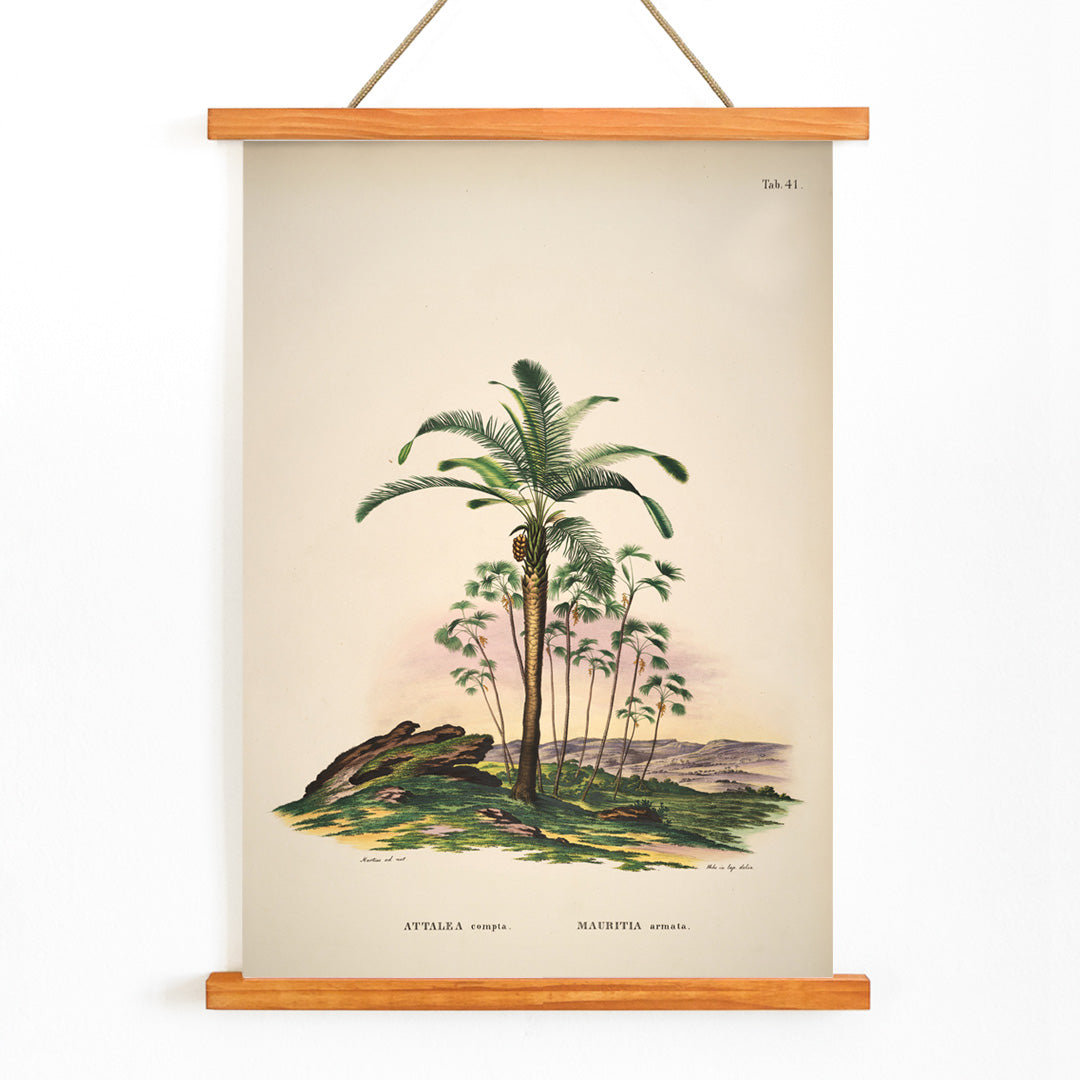
This illustration of Attalea Compta was created during a period when scientific expeditions were crucial for cataloguing the world’s biodiversity. European botanists like Martius relied on fieldwork and collaboration with local experts to document new species, especially those with economic and ecological significance. Palms such as Attalea were of particular interest for their uses in food, materials, and landscape, and this plate served as an essential reference for scholars and horticulturists seeking to identify and compare palm varieties.
The print reflects the era’s dedication to expanding botanical knowledge and making it accessible through precise visual documentation.
Style & Characteristics
The artwork features a central, detailed rendering of the Attalea palm, accompanied by smaller analytical drawings that highlight distinctive botanical features. Fine, precise linework and subtle shading bring out the textures of the leaves and fruit, while the composition remains clear and uncluttered. The palette is composed of muted greens and earthy browns set against a warm beige background, lending the piece a scholarly and timeless atmosphere.
This vintage botanical print exemplifies the balance between scientific accuracy and aesthetic restraint, making it suitable for both classic and contemporary interiors.
In Interior Design
This botanical print lends a refined, natural touch to living rooms, studies, hallways, or serene bedrooms, especially where a subtle focal point is desired. It pairs well with natural materials like wood, rattan, and linen, or can be framed in black for a more modern, gallery-inspired look.
It coordinates effortlessly with green tone wall art and neutral decor, making it a versatile choice for plant enthusiasts, collectors, and those seeking elegant vintage prints for their spaces.