




-

"Very nice Posters. The quality is amazing and we received it very quickly !"
-

"A shop to visit absolutely. Huge selection of posters. We spent more than an hour there !"
-

"Perfect to find gift. Price are very good. An they can frame and pack it on site"


About the Artist
Charles Dessalines D Orbigny was a nineteenth-century French naturalist and botanical illustrator, renowned for his detailed studies of plants. Working during a time when scientific illustration was essential for the advancement of botany, D Orbigny contributed to numerous reference works that bridged the gap between scientific accuracy and visual artistry.
His illustrations were widely used by botanists, educators, and collectors, reflecting the period’s dedication to cataloguing the natural world through careful observation and elegant presentation.
The Artwork
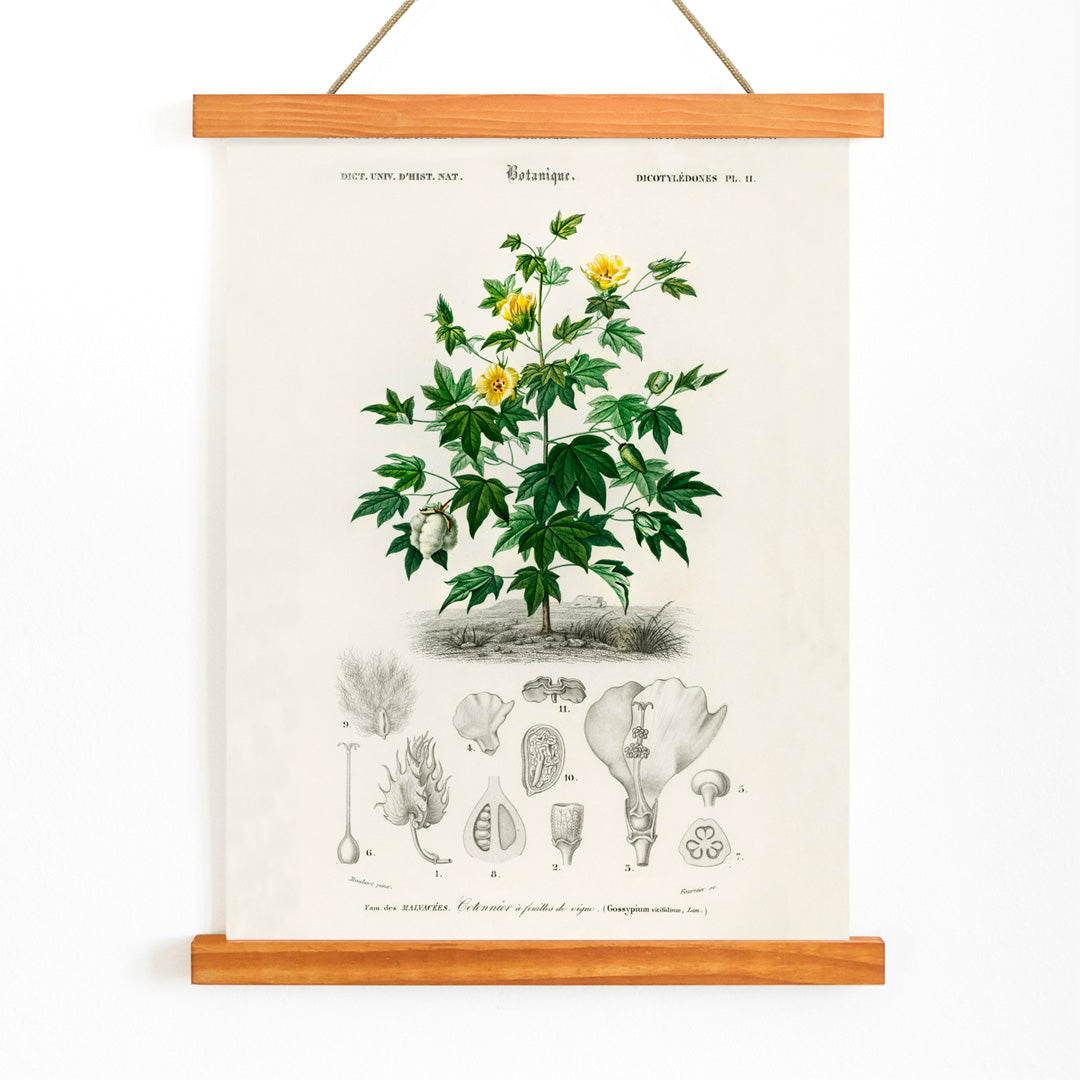
This illustration of Gossypium vitifolium, or Sea Island cotton, was created at a time when cotton was a cornerstone of global agriculture and commerce. Botanical plates like this were produced to aid in the identification and study of economically important plants, supporting both scientific research and agricultural practice in the nineteenth century.
Beyond its practical role, the artwork also represents the era’s fascination with the natural sciences and the desire to disseminate botanical knowledge through beautifully printed volumes and private collections.
Style & Characteristics
The artwork features a single cotton plant, depicted with precise linework and subtle shading. The specimen’s lobed green leaves, slender stems, and pale yellow blossoms are rendered with clarity, while the developing cotton bolls are delicately highlighted to show their texture.
The composition is clean and balanced, set against a light background that emphasizes the plant’s structure. The mood is calm and scholarly, making it appealing to collectors of botanical art and those who appreciate vintage scientific illustration. Internal links to science and green collections offer further inspiration for themed decor.
In Interior Design
This vintage botanical print brings a sense of refined tranquility to spaces such as kitchens, studies, bedrooms, or hallways. Its natural palette and elegant composition pair well with wood, linen, and other organic materials, fitting seamlessly into classic, modern, or cottage interiors.
For a cohesive display, it can be combined with other botanical prints or coordinated with green-themed decor to echo the artwork’s fresh tones. It is especially suited for plant enthusiasts and admirers of nineteenth-century botanical illustration.