




-

"Very nice Posters. The quality is amazing and we received it very quickly !"
-

"A shop to visit absolutely. Huge selection of posters. We spent more than an hour there !"
-

"Perfect to find gift. Price are very good. An they can frame and pack it on site"


About the Artist
Willem de Famars Testas was a Dutch artist known for his evocative drawings and watercolors created during his travels in Egypt and the eastern Mediterranean in the mid-19th century. His attentive approach allowed him to capture everyday moments, architecture, and local customs with a sense of quiet observation and respect for the cultures he encountered.
Testas’s work is associated with European travel art and the Orientalist movement, yet he often prioritized authentic documentation over dramatic spectacle. For those interested in 19th-century Orientalist imagery, explore our Oriental wall art and Famous artists prints for related selections.
The Artwork
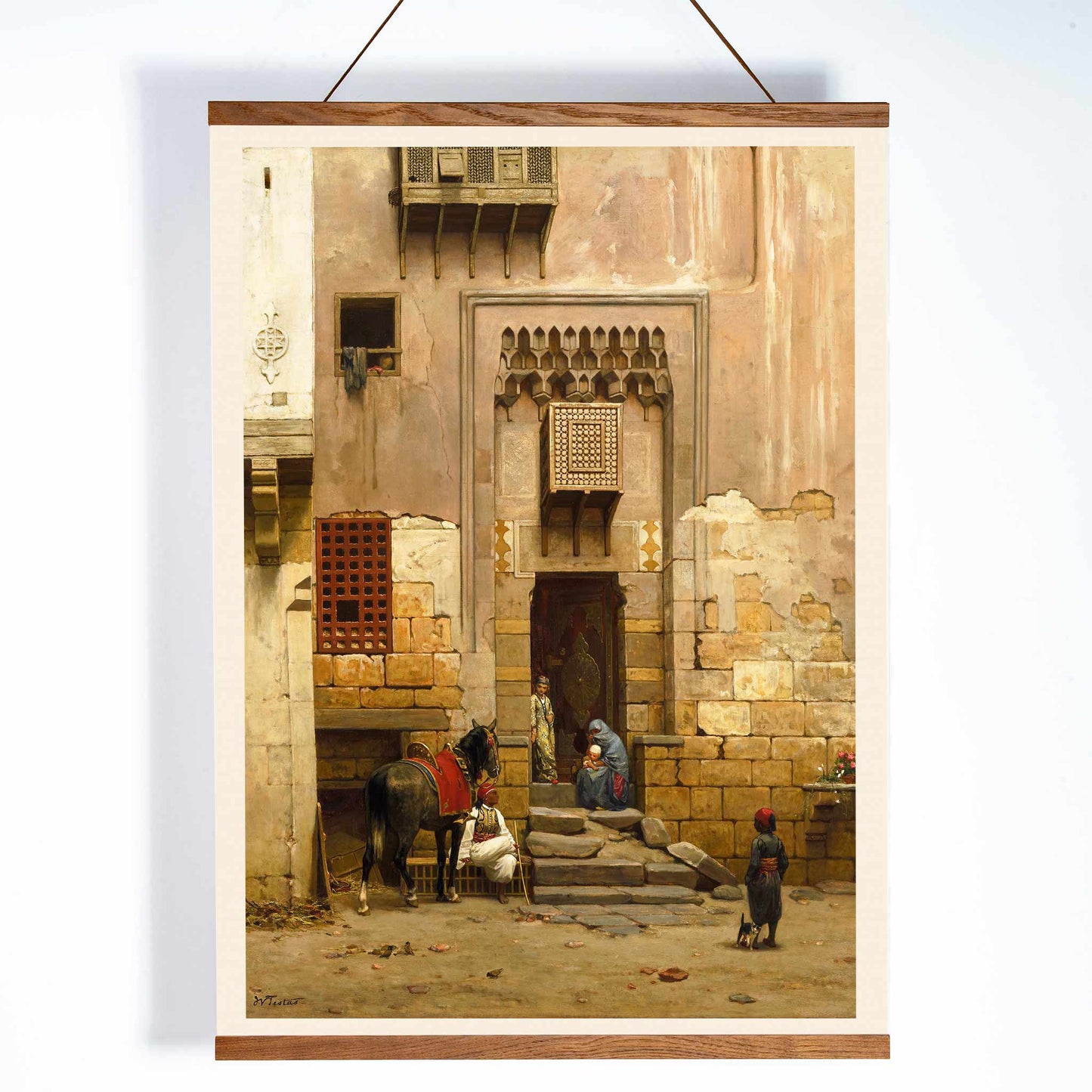
Created in 1864, The Courtyard of a house in Cairo reflects a period when artists sought to depict the lived realities of foreign places rather than just their monumental landmarks. In Cairo, courtyards were central to domestic life, serving as private spaces for family, hospitality, and daily routines away from the public eye.
Testas chose to focus on these intimate aspects, highlighting the subtle interactions and daily rhythms that defined urban Egyptian households. This artwork offers a window into the social and architectural fabric of 19th-century Cairo, emphasizing the importance of private spaces in shaping community life.
Style & Characteristics
The composition is defined by enclosing walls and architectural openings, guiding the viewer’s gaze through the courtyard. Figures and a horse are thoughtfully placed, creating a sense of quiet activity and stillness. Sunlight falls in distinct patches, establishing contrasts between illuminated ground and cooler shadows, while the architecture frames the scene with solidity.
The palette is warm and earthy, dominated by beige and brown tones with subtle red accents that add vibrancy without overwhelming the composition. The overall effect is intimate and atmospheric, blending documentary precision with a gentle, lyrical mood typical of Testas’s travel works.
In Interior Design
This vintage print lends a sense of warmth and understated elegance to living rooms, hallways, or studies, especially in spaces that favor natural materials and soft neutral colors. Its architectural focus complements classic interiors, Mediterranean-inspired rooms, and modern designs with organic textures.
Pair it with sand, terracotta, walnut wood, aged brass, and linen, or create a gallery wall with works from our Classic art prints, beige tone posters, or brown palette wall art. It also harmonizes with photography and travel memorabilia for a layered, collected look.