




-

"Very nice Posters. The quality is amazing and we received it very quickly !"
-

"A shop to visit absolutely. Huge selection of posters. We spent more than an hour there !"
-

"Perfect to find gift. Price are very good. An they can frame and pack it on site"


About the Artist
Winold Reiss was a German American artist and designer who played a key role in introducing European modernist ideas to American illustration and portraiture in the early twentieth century. Arriving in New York in 1913, Reiss developed a distinctive style influenced by Jugendstil, early Art Deco, and a fascination with urban life and performance.
He is especially known for his portraits of figures from the Harlem Renaissance and for his innovative work in magazine and interior design. This 1915 composition aligns Reiss with other famous artists who shaped the evolution of modern visual culture in America.
The Artwork
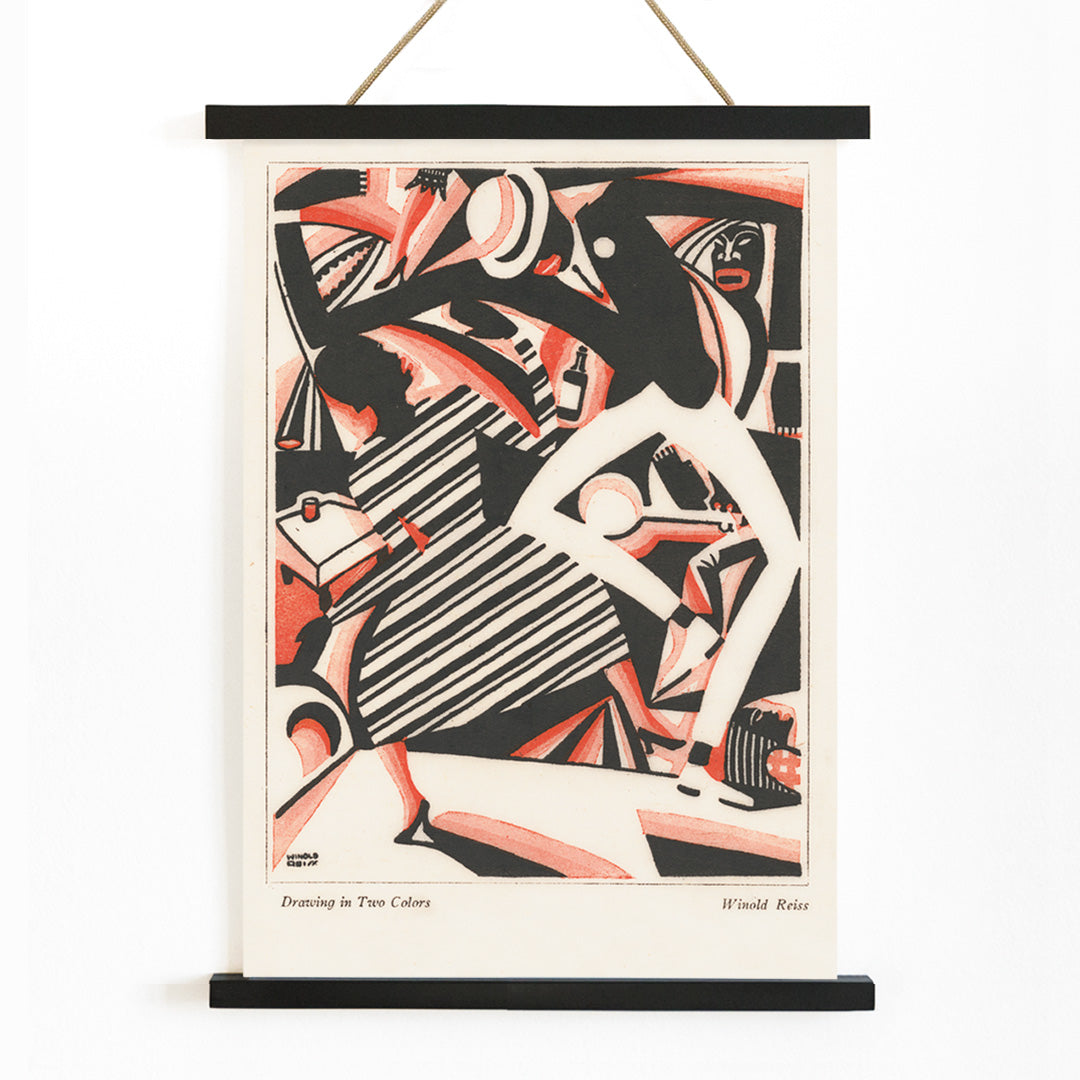
Created in 1915, this drawing reflects a period when urban entertainment and new dance forms were reshaping social life and artistic expression. Rather than presenting dance as a genteel activity, Reiss captures its dynamism and the spirit of a rapidly changing city. The work resonates with the energy of the jazz era, echoing themes found in our music collection.
Designed for print media, the artwork’s bold simplicity made it ideal for posters and magazine illustrations, embodying the immediacy and rhythm of modern urban culture.
Style & Characteristics
The composition is defined by a striking two-color palette: deep black and vivid red set against a light background. The dancer is rendered with strong, angular contours and sweeping curves, emphasizing movement and vitality. The use of clean lines, flattened forms, and pronounced contrast gives the piece a graphic clarity reminiscent of early Art Deco design.
The overall mood is energetic and cosmopolitan, with the interplay of black and red creating a sense of excitement and sophistication. This makes the print a compelling choice for those drawn to bold, modern aesthetics.
In Interior Design
This vintage art print is well suited for living rooms, hallways, home offices, or music corners where a sense of rhythm and movement is desired. It complements modern, mid-century, and graphic interiors, and can also enhance eclectic spaces that blend vintage and contemporary elements.
Pair it with white or neutral walls, charcoal furnishings, and a red accent—such as a cushion or lamp—to echo the artwork’s palette. For a polished look, select a slim black or natural wood frame from our frames collection to highlight the drawing’s refined two-color design.