




-

"Very nice Posters. The quality is amazing and we received it very quickly !"
-

"A shop to visit absolutely. Huge selection of posters. We spent more than an hour there !"
-

"Perfect to find gift. Price are very good. An they can frame and pack it on site"


About the Artist
John Gould was a British ornithologist and publisher whose nineteenth-century bird plates profoundly influenced the study and appreciation of avian species. Collaborating with skilled lithographers and field collectors, Gould produced lavish folios that brought scientific discovery into the homes of Victorian readers, blending meticulous research with visual artistry.
His legacy endures in the way he introduced the wonders of distant wildlife to a broad audience, making natural history both accessible and captivating for generations of collectors and enthusiasts.
The Artwork
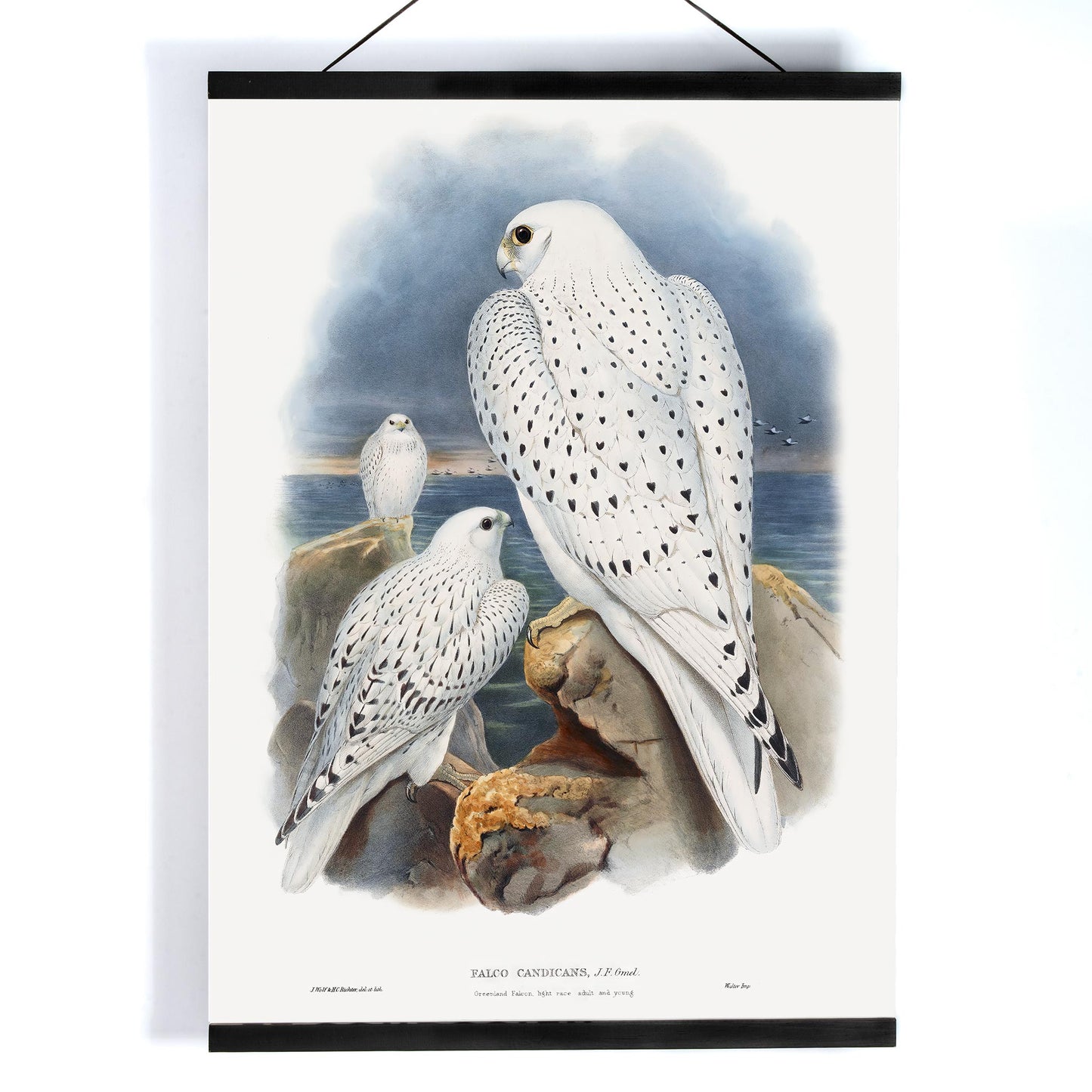
Produced in 1862, this Greenland Falcon plate emerged during a golden age of natural history illustration, when public fascination with remote landscapes and rare animals was at its peak. Such works served as both educational resources and objects of beauty, offering viewers a window into the Arctic world and its majestic raptors.
The Greenland falcon, prized in the traditions of falconry and emblematic of northern wilderness, is presented here as a subject of scientific curiosity and admiration. This print exemplifies the era's drive to document and celebrate the diversity of life, and it remains a classic choice for those interested in science wall art and the history of ornithology.
Style & Characteristics
The illustration features three pale falcons perched and in flight above a rocky northern coastline, their forms rendered with precise linework and subtle shading. The artist employs a restrained palette of whites and soft greys for the birds, contrasted with deep browns in the rocks and cool blues in the sea and sky.
The composition conveys a sense of wind and open space, characteristic of nineteenth-century lithographic technique. The overall effect is both crisp and atmospheric, making it well suited for sea and ocean wall decor and appealing to those drawn to serene, nature-inspired imagery.
In Interior Design
This vintage bird print introduces a tranquil, refined accent to living rooms, studies, or hallways, especially in interiors that favor natural textures and understated elegance. It pairs beautifully with coastal, Scandinavian, or classic decor, either as a focal point or within a curated gallery wall.
Complement its cool tones with ivory walls, pale woods, and linen fabrics, and add contrast through navy, charcoal, or warm leather accents. For a cohesive look, consider displaying it with classic frames and other natural history or wildlife prints from your collection.