




-

"Very nice Posters. The quality is amazing and we received it very quickly !"
-

"A shop to visit absolutely. Huge selection of posters. We spent more than an hour there !"
-

"Perfect to find gift. Price are very good. An they can frame and pack it on site"


About the Artist
Sebastian Oesch was a Swiss graphic artist and poster designer active in the early twentieth century, a period when color lithography transformed public advertising. His work reflects the Swiss tradition of clarity and directness, making everyday subjects visually striking and memorable through expert composition and bold design.
This approach places Oesch among the creators of iconic vintage advertising posters, where artistry and functionality merge to elevate commercial announcements into collectible art.
The Artwork
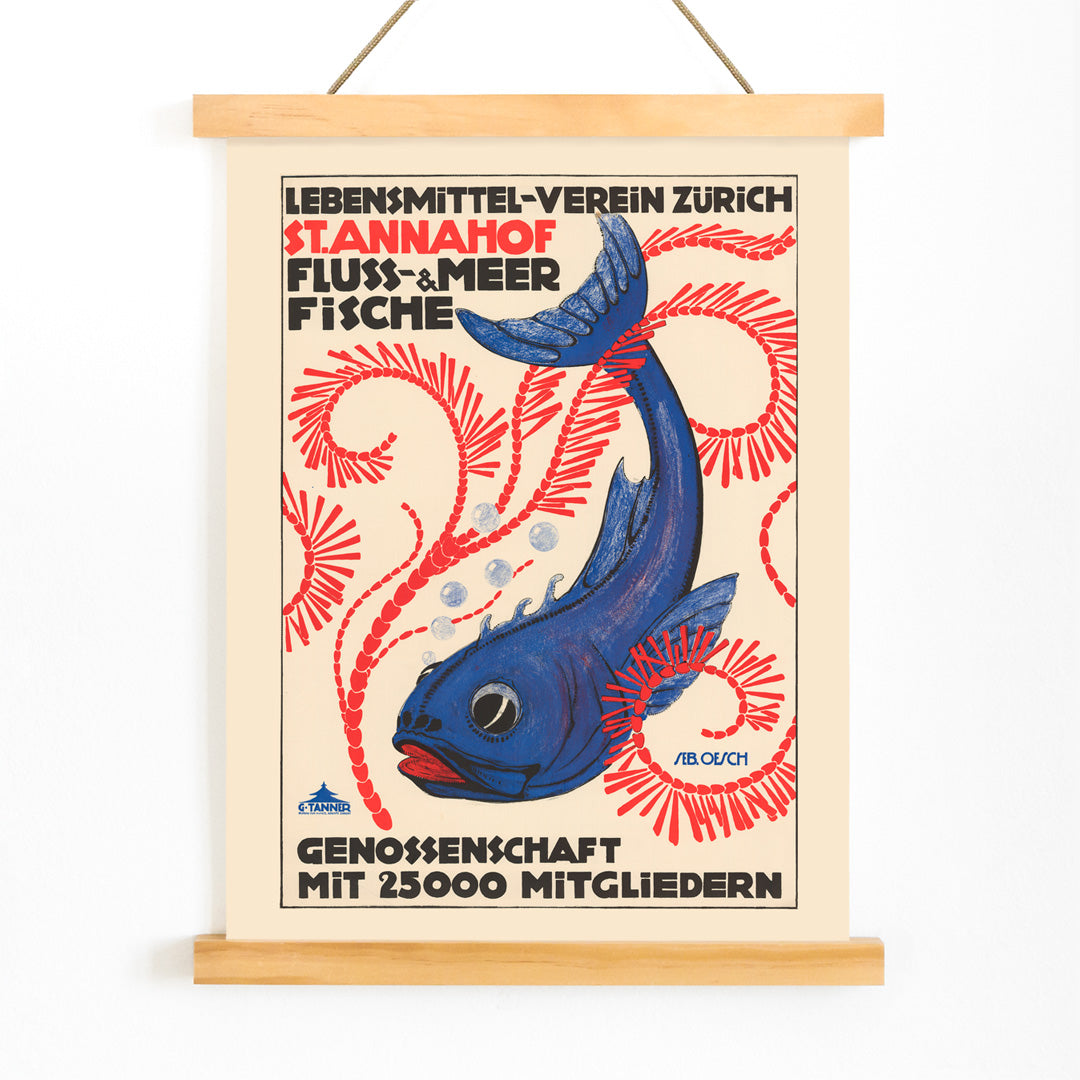
Commissioned for the opening of Zurich's St Annahof in 1914, this poster was designed to promote the Food Association Zurich and its commitment to quality and freshness. At a time when urban food supply was becoming more organized and visible, the poster served as a symbol of civic trust and modern standards in food commerce. The central fish motif highlights Zurich's connection to trade and the promise of fresh products, reflecting the city's growing role as a hub for reliable goods.
As a historical artifact, the poster illustrates how institutions used visual media to communicate abundance and trustworthiness, transforming a local event into a lasting piece of graphic heritage.
Style & Characteristics
The design centers on a striking fish rendered in flat, high-contrast shapes, complemented by assertive typography for maximum street impact. The lithographic technique ensures clean outlines and vivid colors, making the poster easily legible from a distance.
The color palette features deep blue, bright red, black, and a warm beige background, creating a lively and appetizing atmosphere. The overall effect is energetic and modern, with a graphic style that remains fresh and appealing as a kitchen wall art or part of a sea and ocean prints collection.
In Interior Design
This vintage poster brings a dynamic accent to kitchens, dining spaces, or cafés, especially when paired with other culinary or market-themed artwork. Its bold graphics complement tiled surfaces, light woods, and minimalist interiors, maintaining visual impact even in busy spaces.
To create a cohesive look, echo the blue and red tones in accessories or textiles. The poster also integrates seamlessly into gallery walls focused on food, trade, or maritime themes, adding a touch of Swiss heritage and urban flair.