




-

"Very nice Posters. The quality is amazing and we received it very quickly !"
-

"A shop to visit absolutely. Huge selection of posters. We spent more than an hour there !"
-

"Perfect to find gift. Price are very good. An they can frame and pack it on site"


About the Artist
Philip Reinagle was a British painter and illustrator active at the turn of the nineteenth century, renowned for his ability to combine artistic finesse with scientific accuracy. His contributions to natural history illustration helped bridge the gap between fine art and scientific documentation, at a time when botanical exploration was transforming European knowledge and aesthetics.
Reinagle’s collaboration with major projects such as Robert John Thornton’s Temple of Flora placed him at the forefront of a movement that celebrated the beauty and diversity of the plant world, making his works prized by collectors and scholars alike.
The Artwork
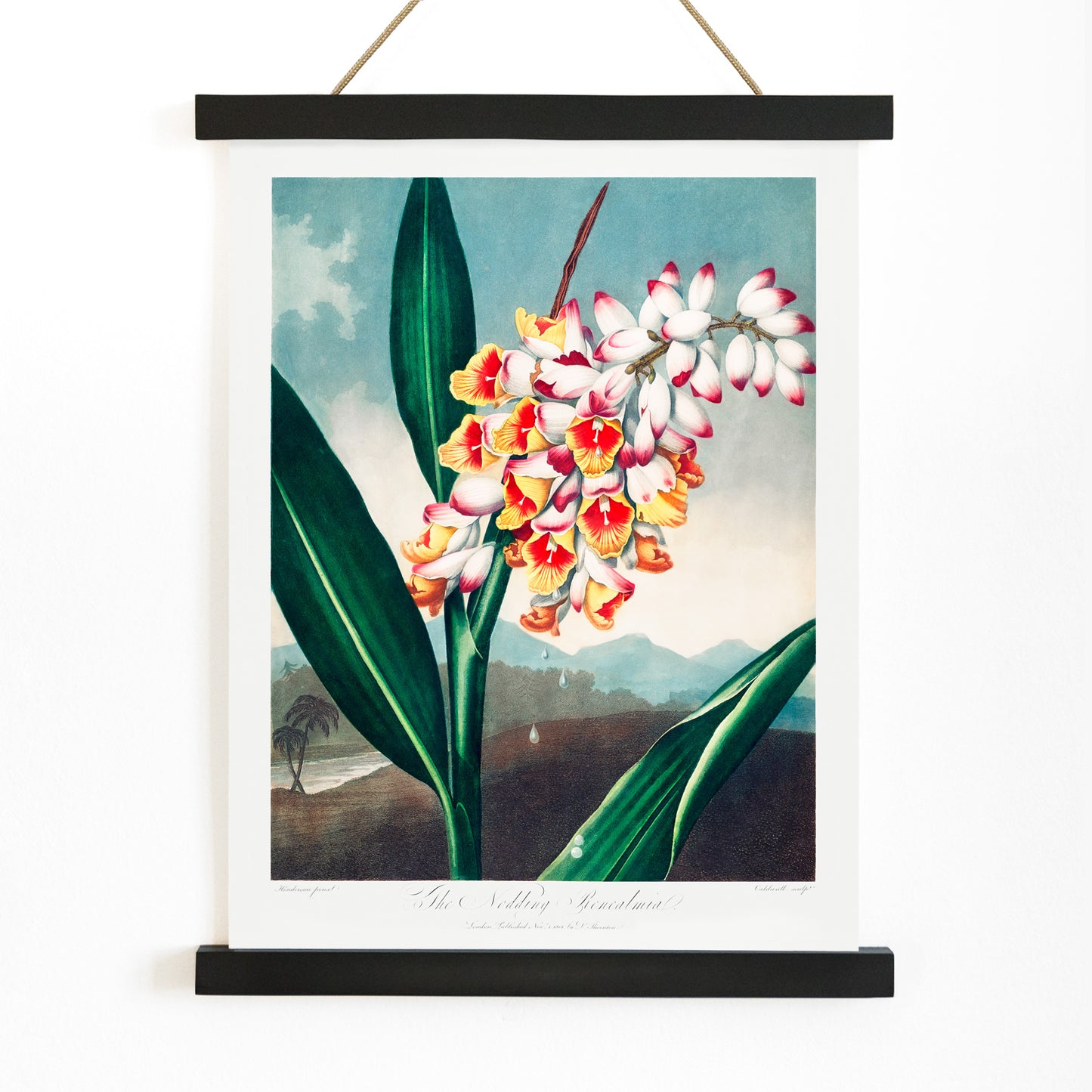
This 1807 plate of the Nodding Renealmia was created for the Temple of Flora, a groundbreaking botanical publication that sought to elevate plant illustration into a form of visual spectacle. The artwork reflects the era’s fascination with exotic species newly introduced to Europe through exploration and trade, transforming scientific plates into cultural statements.
Intended to inspire both scientific interest and aesthetic appreciation, this botanical print exemplifies how early nineteenth-century art could communicate the marvels of nature to a wide audience, blending education with emotional resonance.
Style & Characteristics
The composition presents a single Renealmia plant, isolated against a pale background that draws the viewer’s focus to its elegant form. The leaves and blossoms are rendered with careful attention to botanical detail, while subtle shading imparts a sense of depth and vitality.
The overall mood is poised and contemplative, characteristic of Temple of Flora illustrations. The print’s refined palette and precise modeling make it suitable as both a decorative object and a study piece, appealing to those who appreciate vintage botanical art with a scholarly touch.
In Interior Design
This botanical print lends a cultivated, tranquil presence to living rooms, studies, bedrooms, or hallways, especially when paired with natural materials and understated frames. Its historical character makes it a versatile accent for both traditional and contemporary interiors.
For harmonious curation, consider pairing it with selections from our botanical prints, green toned wall art, or science illustration collection. It serves as a timeless focal point for spaces inspired by nature and history.