




-

"Very nice Posters. The quality is amazing and we received it very quickly !"
-

"A shop to visit absolutely. Huge selection of posters. We spent more than an hour there !"
-

"Perfect to find gift. Price are very good. An they can frame and pack it on site"


About the Artist
Frank J. Mace is credited as the designer of this 1938 poster, created during a period when commercial illustration embraced both clarity and decorative flair. Although little is widely known about Mace’s broader career, his work here reflects the confidence and precision characteristic of interwar graphic design.
This poster exemplifies how everyday subjects could be elevated into memorable visual statements, aligning with the era’s enthusiasm for modern home decoration and the enduring appeal of crafted objects.
The Artwork
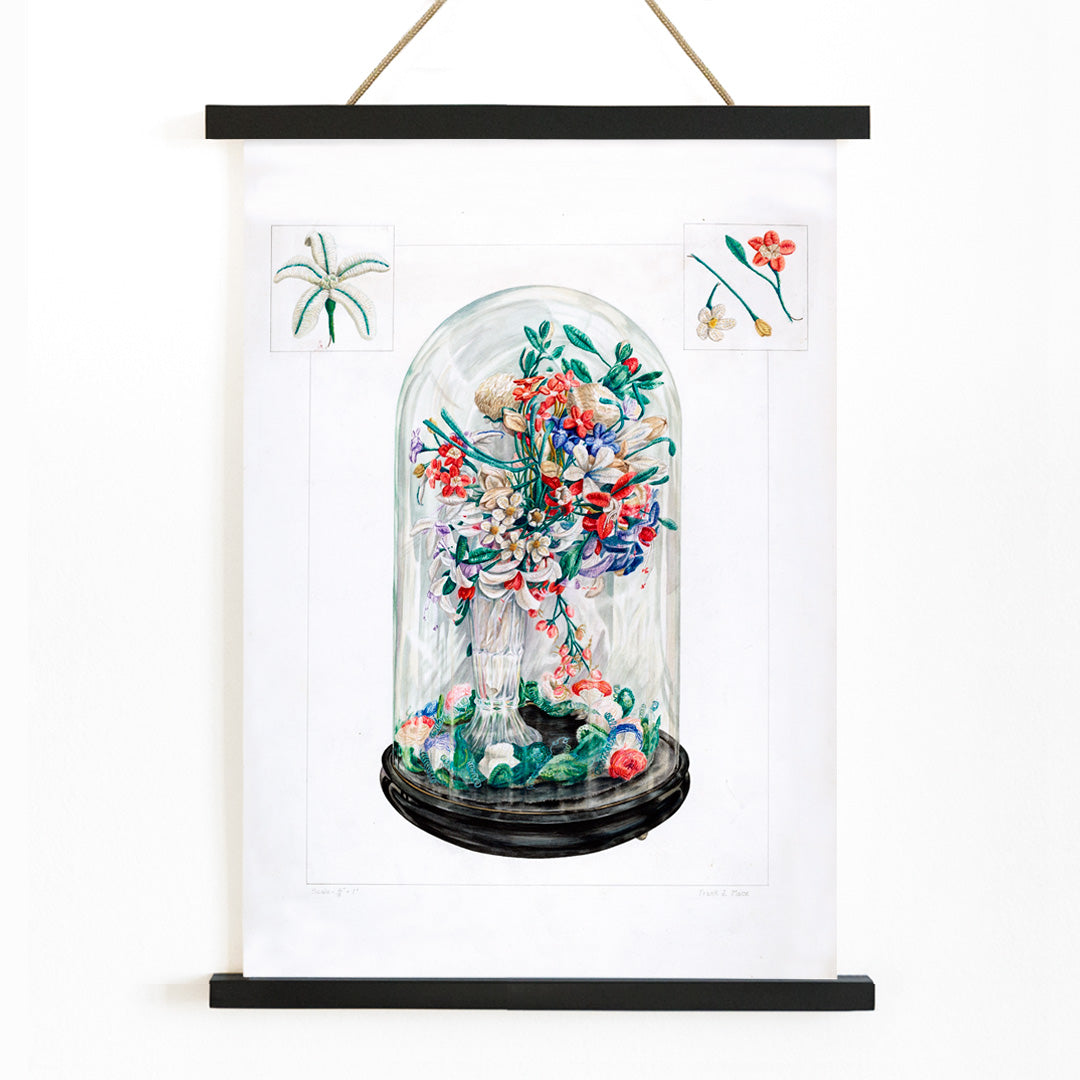
Wool Flowers Under Glass captures the domestic tradition of creating long-lasting beauty from simple materials. In the late 1930s, such imagery resonated with a culture that valued handmade crafts and thoughtful gift giving. The depiction of wool flowers protected beneath a glass dome speaks to the pride in preserving and displaying personal handiwork, a sentiment that found its way into both private homes and public poster art.
Those interested in botanical themes may also appreciate our curated botanical selection, which highlights the artistry of arranged flora across eras.
Style & Characteristics
The artwork features a prominent glass cloche encasing a vivid bouquet of stylized wool flowers and leaves. The dome is rendered with crisp highlights, suggesting transparency and a sense of gentle protection. The bouquet itself is composed of bold reds, deep blues, greens, and touches of white and black, creating a lively yet harmonious palette.
Clean lines and strong contrasts give the piece a graphic clarity typical of late Art Deco posters. The overall mood is poised and quietly cheerful, with a theatrical presentation that draws the eye and celebrates the artistry of everyday objects. This makes it a striking example of vintage floral poster design.
In Interior Design
This vintage poster brings a touch of handcrafted charm to kitchens, dining areas, and creative studios. Its vertical format is ideal for narrow spaces, entryways, or reading nooks, and it pairs beautifully with other vertical posters in a gallery arrangement.
To create a cohesive look, echo the artwork’s reds and blues with ceramics or textiles, and use black or dark wood frames to ground the composition. For those seeking vibrant yet refined accents, this piece also complements red artwork in both modern and classic interiors.