




-

"Very nice Posters. The quality is amazing and we received it very quickly !"
-

"A shop to visit absolutely. Huge selection of posters. We spent more than an hour there !"
-

"Perfect to find gift. Price are very good. An they can frame and pack it on site"


About the Artist
Ohara Koson was a leading master of early twentieth-century Japanese woodblock printing, renowned for his kacho-e images depicting birds and flowers. Active during the shin hanga movement, Koson played a key role in revitalizing traditional ukiyo-e techniques for a modern audience, blending naturalistic detail with poetic restraint.
His works were admired both in Japan and internationally for their subtle observation of nature and exquisite craftsmanship. For more examples of this tradition, visit our Ohara Koson collection of vintage Japanese prints and wall art.
The Artwork
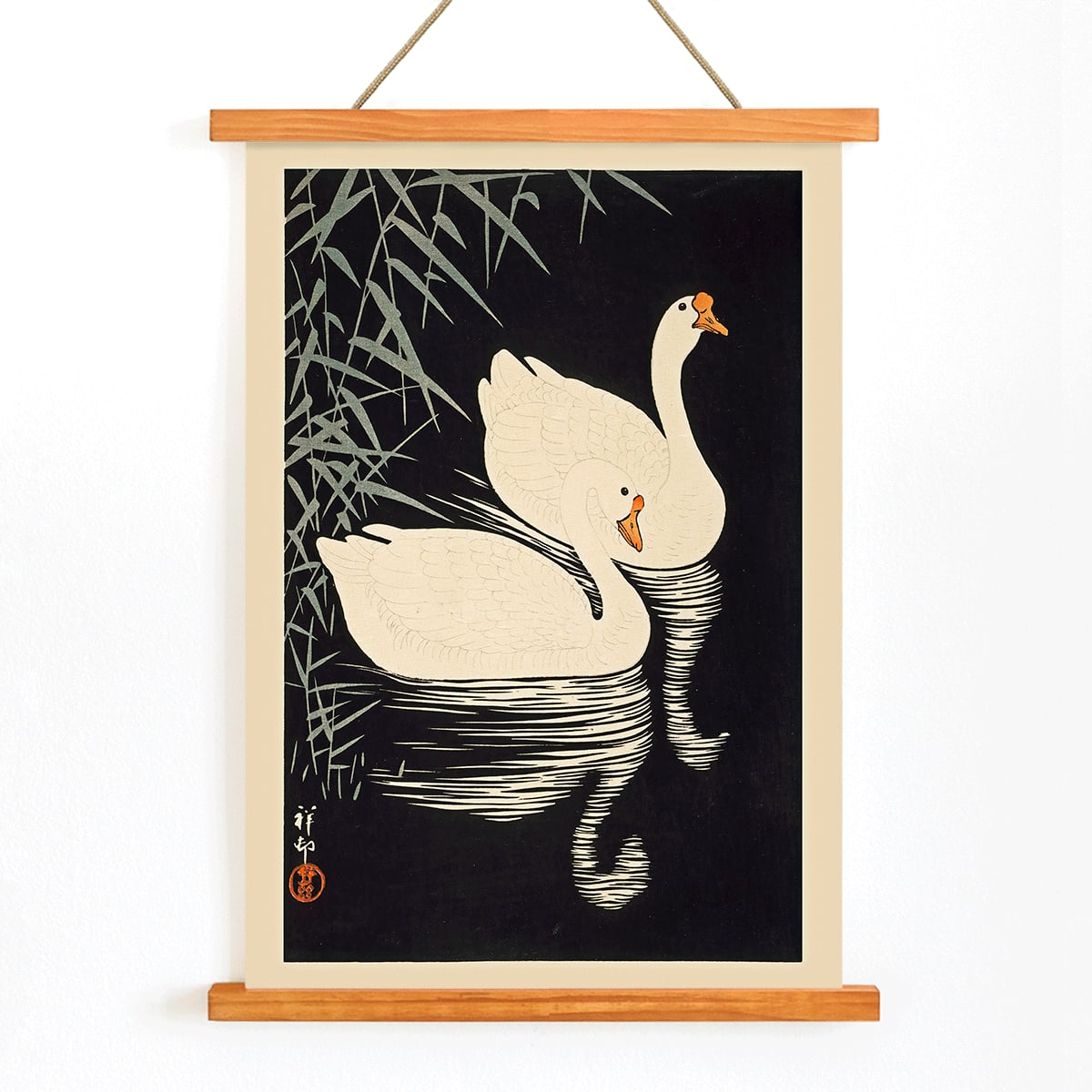
Created in 1928, this print of white Chinese geese reflects the shin hanga era’s fascination with the quiet beauty of everyday wildlife. In Japanese art, geese are often associated with themes of companionship, migration, and the changing seasons, offering viewers a sense of tranquility and continuity.
Such works were intended for private enjoyment, bringing a contemplative glimpse of nature into the home. The focus on water birds like geese also mirrored a growing cultural interest in observing and appreciating the natural world, making this print a meaningful piece within the tradition of Japanese wildlife art. Discover more animal subjects in our animals wall art collection.
Style & Characteristics
The composition is understated and harmonious: two white geese glide gracefully across a dark expanse of water, with slender reeds rising vertically to one side. The restrained palette features crisp white plumage, deep black water, warm beige background, and delicate orange accents on the beaks and feet.
Koson’s technique emphasizes clean outlines and gentle gradations of tone, creating a sense of volume without heaviness. The atmosphere is serene and spacious, with open areas that evoke a feeling of quiet reflection. For more light-toned pieces, explore our white posters and prints collection.
In Interior Design
This art print complements interiors that favor calm and simplicity, such as Japandi, minimalist, or classic-inspired spaces. It is especially suited to bedrooms, hallways, or reading nooks where a peaceful subject can enhance the mood without overwhelming the decor.
Pair it with natural wood, matte black accents, or linen textiles to echo the print’s organic elements, and let the white tones brighten a neutral scheme. It also integrates beautifully into a gallery wall with other understated artworks, maintaining an airy and cohesive interior aesthetic.