




-

"Very nice Posters. The quality is amazing and we received it very quickly !"
-

"A shop to visit absolutely. Huge selection of posters. We spent more than an hour there !"
-

"Perfect to find gift. Price are very good. An they can frame and pack it on site"


About the Artist
Louis Renard was an Amsterdam-based publisher and printseller active in the early eighteenth century, renowned for his pioneering work in natural history illustration. Drawing from specimens, travelers’ accounts, and artists working in the Dutch East Indies, Renard compiled some of the earliest color-printed books on marine life. His publications offered European audiences their first vivid glimpses of exotic sea creatures from distant tropical waters.
Renard’s legacy lies in his ability to merge scientific curiosity with artistic flair, creating works that document biodiversity while captivating viewers with their imaginative presentation. His prints remain prized by collectors interested in the intersection of exploration, science, and decorative art.
The Artwork
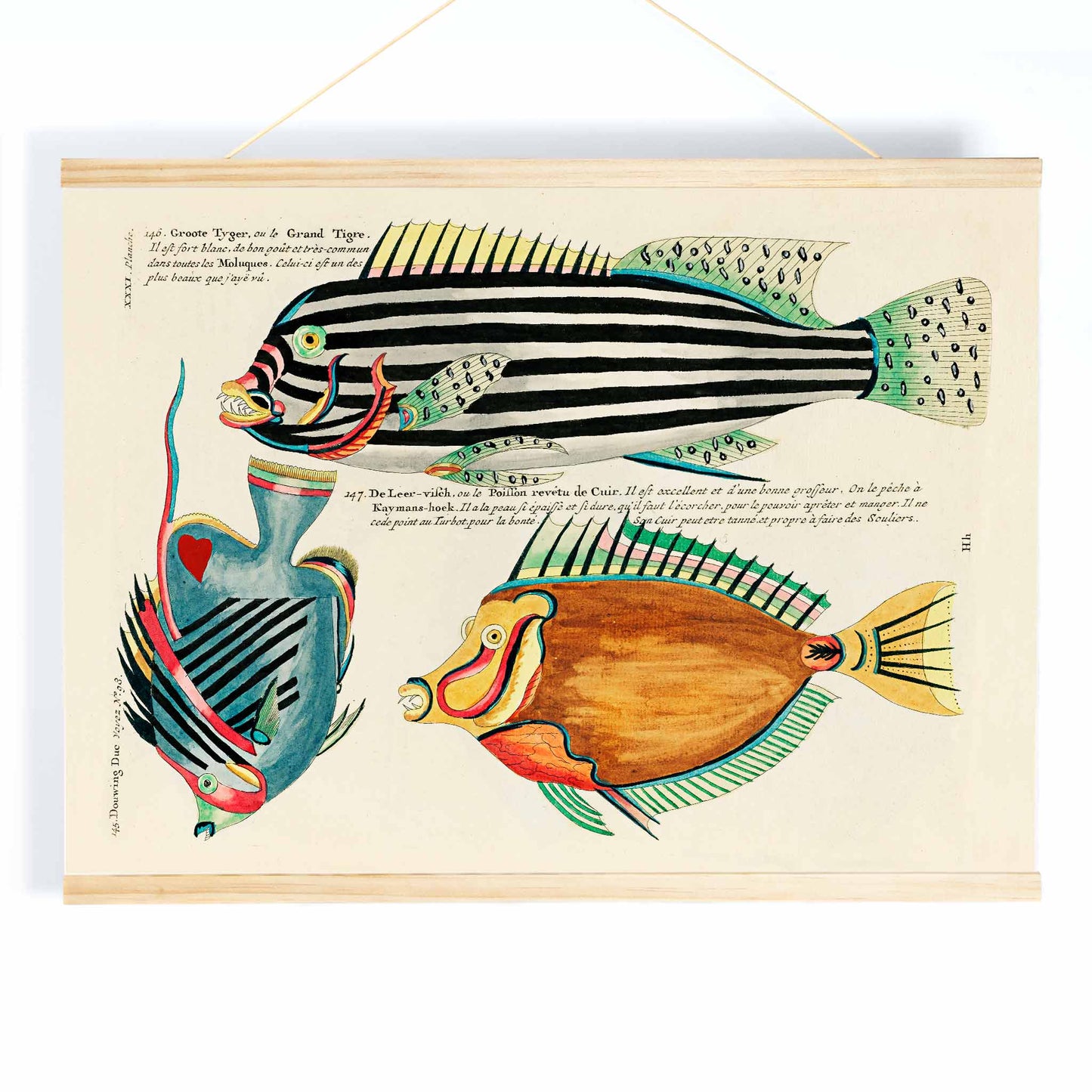
Produced in 1754, this plate is part of Renard’s influential series cataloguing the fishes and marine animals of the East Indies. Created during a period of intense maritime exploration and trade, these images served both as scientific references and as objects of wonder for European readers fascinated by the unknown. The artwork reflects the era’s appetite for cataloguing the natural world and the allure of the unfamiliar.
Renard’s plates were intended to both inform and astonish, offering a glimpse into the biodiversity encountered by Dutch traders and naturalists. Today, they are valued as historical documents and as striking examples of early marine illustration, making them a natural fit for sea and ocean wall art and collectors of animal-themed prints.
Style & Characteristics
This composition features several tropical fish depicted in crisp side profiles, each isolated against a clean white background. The print combines precise linework with hand-applied color, resulting in vivid reds, yellows, greens, and blues that animate the forms. The fish are rendered with exaggerated fins and bold striping, lending them a fantastical, almost surreal quality.
The overall effect is both decorative and scientific, with each specimen presented clearly for study yet enlivened by imaginative coloration. The print’s playful rhythm and bright palette create a lively atmosphere, bridging the gap between natural history documentation and decorative art.
In Interior Design
This vintage print brings a touch of curiosity and color to interiors, especially in spaces that embrace eclectic or coastal themes. It works beautifully in living rooms, studies, or hallways where a conversation piece is desired, and can also enliven kitchens or dining areas with its maritime charm.
Pair with light woods and neutral tones for a fresh, airy look, or echo its saturated hues with blue or green accents. For those interested in scientific or natural history decor, it also complements science-inspired wall art and adds a historical dimension to gallery walls.