




-

"Very nice Posters. The quality is amazing and we received it very quickly !"
-

"A shop to visit absolutely. Huge selection of posters. We spent more than an hour there !"
-

"Perfect to find gift. Price are very good. An they can frame and pack it on site"


About the Artist
Goyō Hashiguchi was a Japanese artist renowned for his contributions to the shin-hanga movement, which revitalized traditional woodblock printing in early 20th-century Japan. Trained in both Japanese painting and illustration, Hashiguchi became known for his refined depictions of women, or bijin ga, combining classical techniques with a modern sensibility.
He worked in close collaboration with master carvers and printers, personally supervising each stage to achieve the luminous quality that distinguishes his prints. Collectors interested in famous artists value his work for its blend of technical mastery and subtle emotional resonance.
The Artwork
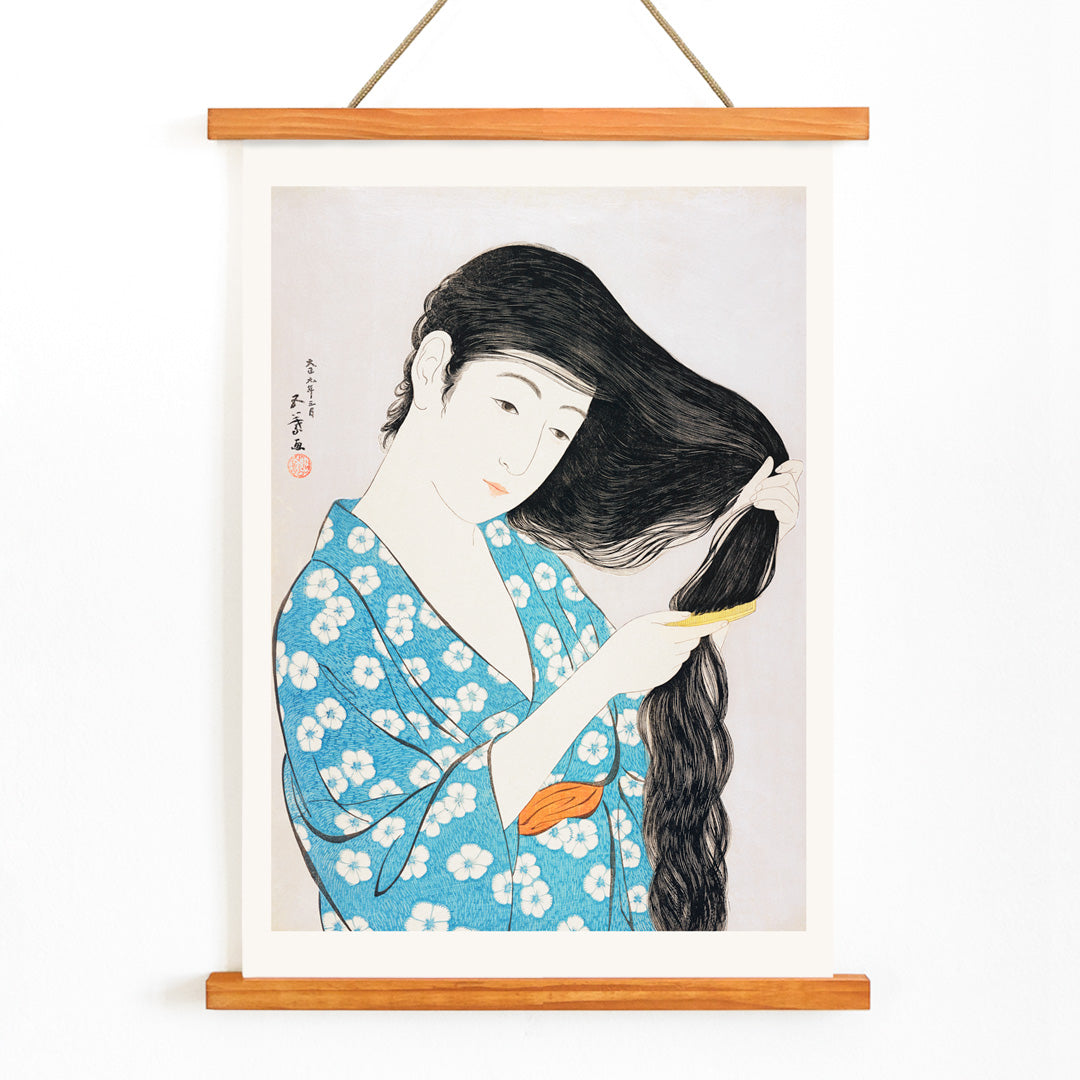
Created in 1920, Woman Combing Her Hair captures a private, contemplative moment, reflecting the changing roles and ideals of women during Japan’s Taisho era. As urbanization and modern lifestyles emerged, such intimate scenes offered viewers a sense of tranquility and introspection, contrasting with the pace of city life.
This print was produced for a new generation of art enthusiasts who sought works that balanced tradition with contemporary appeal. The subject draws on a longstanding Japanese appreciation for the rituals of grooming and the quiet poetry of everyday domestic life.
Style & Characteristics
The composition centers on a single woman, her back turned, absorbed in combing her long, flowing black hair. The simplicity of the scene is heightened by broad, open spaces and minimal background detail, creating a serene and meditative atmosphere.
The blue kimono, adorned with delicate pale floral patterns, contrasts gently with the warm beige of the paper, while crisp black outlines define the figure. Subtle gradations of tone and careful woodblock technique evoke a sense of softness and depth, making this work a standout among oriental art prints.
In Interior Design
This vintage art print is ideal for spaces that benefit from calm and focus, such as bedrooms, reading nooks, or dressing areas. Its understated palette pairs beautifully with natural wood, linen, and stone finishes, fitting seamlessly into wabi sabi, Scandinavian, or minimalist interiors.
For a harmonious gallery wall, pair it with other blue art prints and neutral-toned mats that echo the background. A simple black or light oak frame will enhance the silhouette, creating a tranquil focal point for admirers of Japanese printmaking.