




-

"Very nice Posters. The quality is amazing and we received it very quickly !"
-

"A shop to visit absolutely. Huge selection of posters. We spent more than an hour there !"
-

"Perfect to find gift. Price are very good. An they can frame and pack it on site"


About the Artist
Utagawa Kuniyoshi was one of the great masters of ukiyo-e in Edo-period Japan, renowned for his dynamic storytelling and inventive figure design. Active during the early to mid-19th century, Kuniyoshi explored a wide range of subjects, from legendary warriors to scenes of daily life and fashion. His prints contributed to the flourishing urban culture of Edo, capturing both the spirit and sophistication of the era.
For more works from this tradition, explore our oriental art collection and curated famous artists prints.
The Artwork
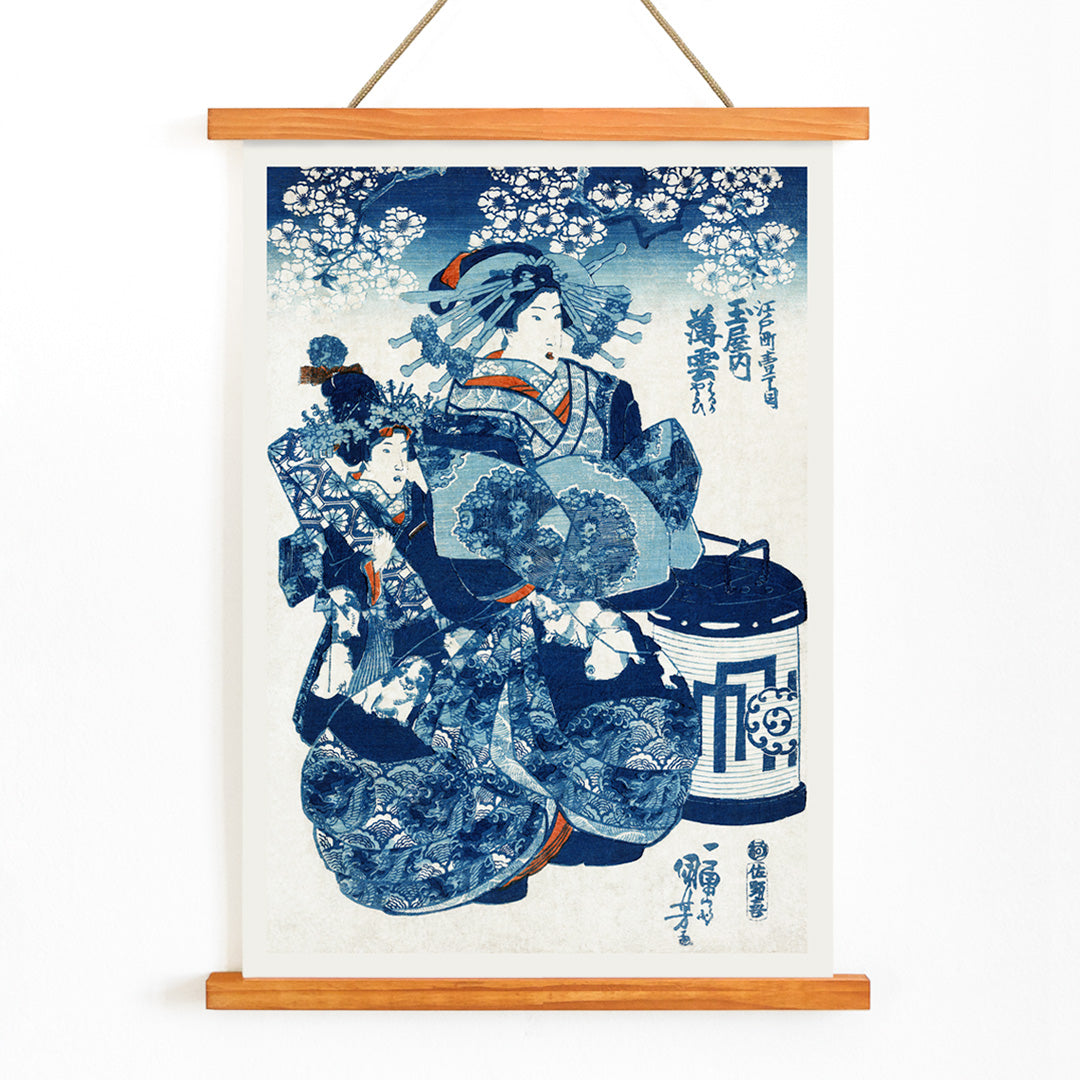
This 1831 print was created at a time when images of elegant women, known as bijin-ga, were highly popular in Edo Japan. Such artworks reflected the tastes and aspirations of city dwellers, serving as visual records of contemporary fashion, beauty ideals, and social customs. Kuniyoshi’s depiction of a kimono-clad woman offers insight into the refined world of the pleasure quarters and the importance of personal style in urban society. The print embodies the intersection of art, fashion, and cultural identity in a rapidly changing city.
As a widely circulated woodblock print, it provided viewers with a glimpse into the elegance and poise that defined the era’s feminine ideals.
Style & Characteristics
The composition features a single woman standing in profile, rendered with graceful lines and areas of flat color characteristic of Japanese woodblock technique. The palette is dominated by cool blues and soft whites, lending the scene a tranquil and airy quality. Delicate patterns on the kimono and subtle shading highlight the figure’s posture and attire, while the absence of a detailed background focuses attention on her presence and style.
The overall mood is calm and contemplative, with a minimalist aesthetic achieved through careful use of negative space. If you appreciate this palette, discover more blue-toned wall decor for a harmonious display.
In Interior Design
This Kuniyoshi print makes an elegant vertical accent in spaces such as hallways, bedrooms, or reading nooks, where its serene presence can be enjoyed up close. It complements Japandi, Scandinavian, and minimalist interiors, pairing well with light woods, matte black accents, and natural textiles.
To echo its blue and white tones, consider indigo ceramics, off-white walls, or pale oak furnishings. This piece also layers beautifully with other classic art prints, offering a refined focal point within a curated gallery wall.