




-

"Very nice Posters. The quality is amazing and we received it very quickly !"
-

"A shop to visit absolutely. Huge selection of posters. We spent more than an hour there !"
-

"Perfect to find gift. Price are very good. An they can frame and pack it on site"


About the Artist
Josephus Augustus Knip was a Dutch landscape painter and draftsman whose career bridged late Neoclassicism and early Romantic sensibility. Active in the early 1800s, he is especially admired for Italian views shaped by careful observation and a traveler’s eye for atmosphere.
Knip spent formative years in Italy, producing topographical studies that balance geography with poetic calm. Collectors today often seek his work within classic art traditions, where a seemingly simple view becomes enduring wall art.
The Artwork
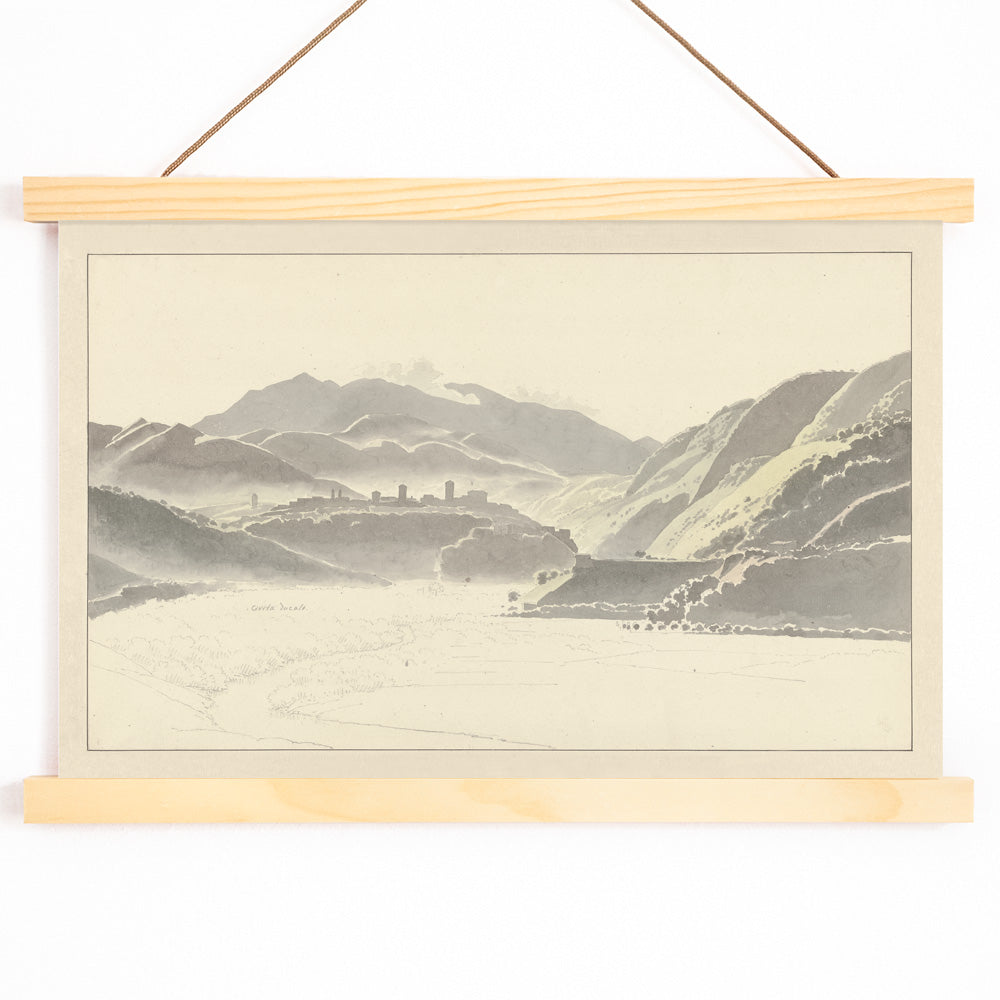
View of Cittaducale, dated 1806, reflects the era of artistic travel that accompanied the Grand Tour. For northern European artists, Italian towns like Cittaducale represented a connection to history and daily life outside the major cities, offering inspiration rooted in authenticity and quiet observation.
This work captures the spirit of early nineteenth-century exploration, when artists documented their journeys to preserve the memory of place. The print serves as a visual record of a specific moment and locale, embodying the desire to translate travel experiences into lasting works of art.
Style & Characteristics
The composition presents a tranquil landscape, rendered with gentle tonal transitions and a restrained palette. Soft greys, muted whites, and the warm beige of the paper create an airy, understated effect that emphasizes clarity and distance.
Knip’s technique guides the viewer’s gaze across the layered terrain toward the distant town, evoking a serene and contemplative mood. The overall effect is both documentary and poetic, making this art print a refined example of vintage Italian landscape imagery.
In Interior Design
This art print integrates seamlessly into living rooms, hallways, or studies, especially where a calm atmosphere is desired. Its subtle colors pair well with stone, linen, oak, and plaster finishes in modern, Scandinavian, or classic interiors.
For a cohesive gallery wall, combine it with other landscape wall art or neutral pieces from the beige tones collection. A simple mat and a light wood or black frame will highlight the drawing’s refinement while maintaining an open, airy feel.