




-

"Very nice Posters. The quality is amazing and we received it very quickly !"
-

"A shop to visit absolutely. Huge selection of posters. We spent more than an hour there !"
-

"Perfect to find gift. Price are very good. An they can frame and pack it on site"


About the Artist
Ernst Fröhlich is credited on late 19th-century natural history plates that reflect the era’s growing enthusiasm for field observation and scientific classification. While little is known about his personal biography, his illustrations contributed to a tradition of meticulously documented reference works that served both scholars and the wider public interested in the natural world.
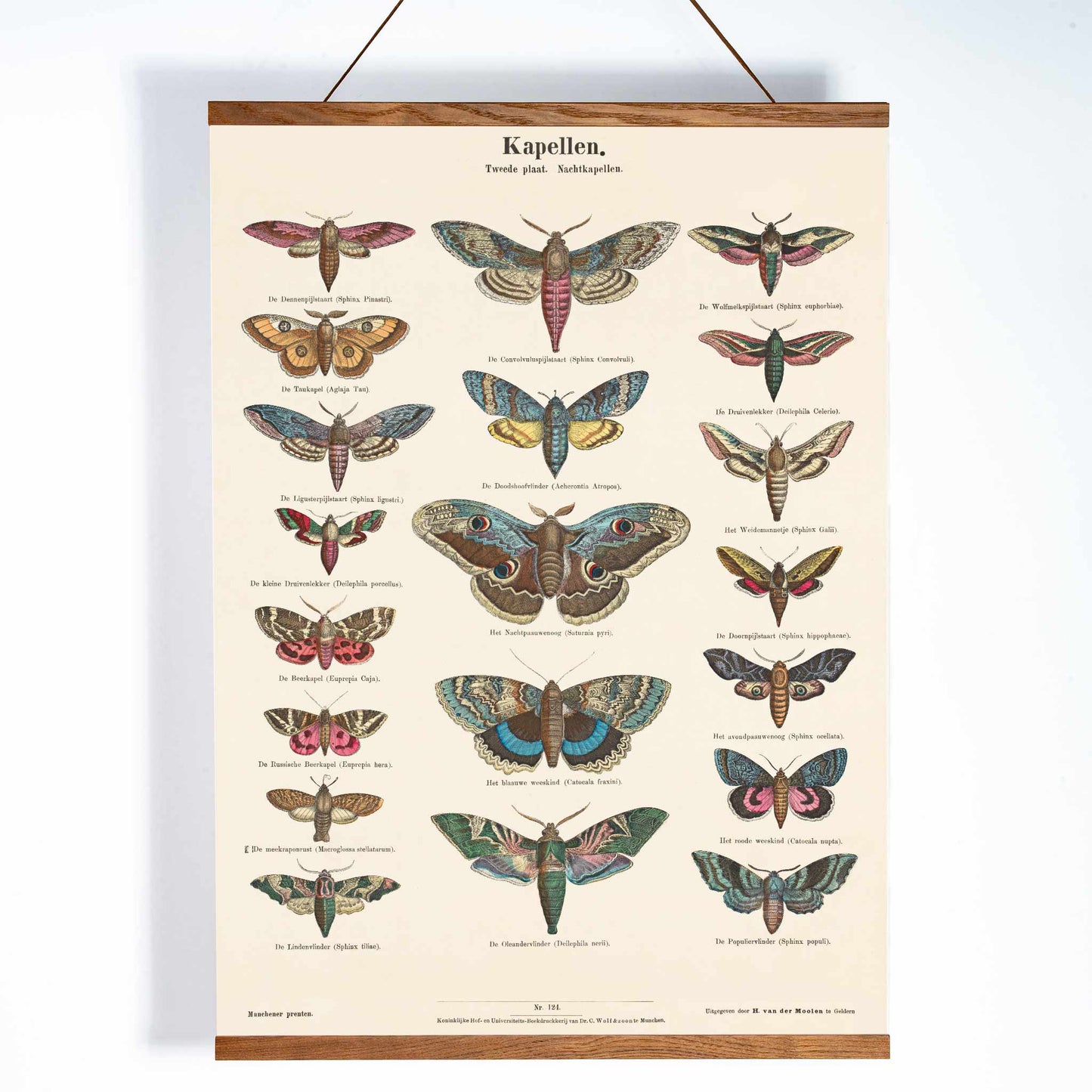
His work, including this study of night butterflies, exemplifies the blend of scientific rigor and visual appeal that made entomological art so valued in the 1800s. For more examples of this intersection between science and art, explore our science prints.
The Artwork
Published in 1878, this print was designed as a reference tool during a period when natural history was a popular pursuit among collectors and educators. Such plates were essential in museums and private collections, helping to document and classify species at a time when the natural sciences were rapidly advancing.
The focus on nocturnal butterflies and moths reflects a 19th-century fascination with the mysteries of the night and the symbolism of transformation and subtle beauty. This artwork offered viewers a window into the hidden diversity of the natural world, encouraging curiosity and appreciation for lesser-known species. For related themes, see our animals collection.
Style & Characteristics
The print arranges eighteen butterflies and moths in a precise grid, reminiscent of a specimen drawer, allowing for easy comparison of wing shapes and patterns. Each insect is rendered with delicate linework and careful attention to anatomical detail, from the fine antennae to the subtle segmentation of the bodies.
The palette is understated, featuring earthy browns, muted greens, gentle blues, and touches of yellow and red, all set against a light background. The overall effect is calm and methodical, emphasizing clarity and scientific observation while retaining a quiet elegance typical of vintage natural history illustration.
In Interior Design
This vintage print brings a sense of order and discovery to spaces such as studies, libraries, or bedrooms. Its structured composition complements both classic and contemporary interiors, pairing well with natural materials like wood and linen.
To enhance its presence, consider echoing its colors with green plants or blue ceramics, or layering it with other nature-inspired pieces from our botanical prints selection for a cohesive gallery wall.