




-

"Very nice Posters. The quality is amazing and we received it very quickly !"
-

"A shop to visit absolutely. Huge selection of posters. We spent more than an hour there !"
-

"Perfect to find gift. Price are very good. An they can frame and pack it on site"


About the Artist
Oswald de Kerchove de Denterghem was a Belgian horticulturist and writer active in the late nineteenth century. His dedication to the study and classification of exotic plants contributed to the flourishing of botanical science in Europe. Through his detailed publications, he helped popularize the appreciation of rare species among both scientists and the public.
His works are emblematic of a period when botanical illustration bridged scientific inquiry and aesthetic enjoyment, a tradition that continues to inspire collectors of classic art and botanical enthusiasts today.
The Artwork
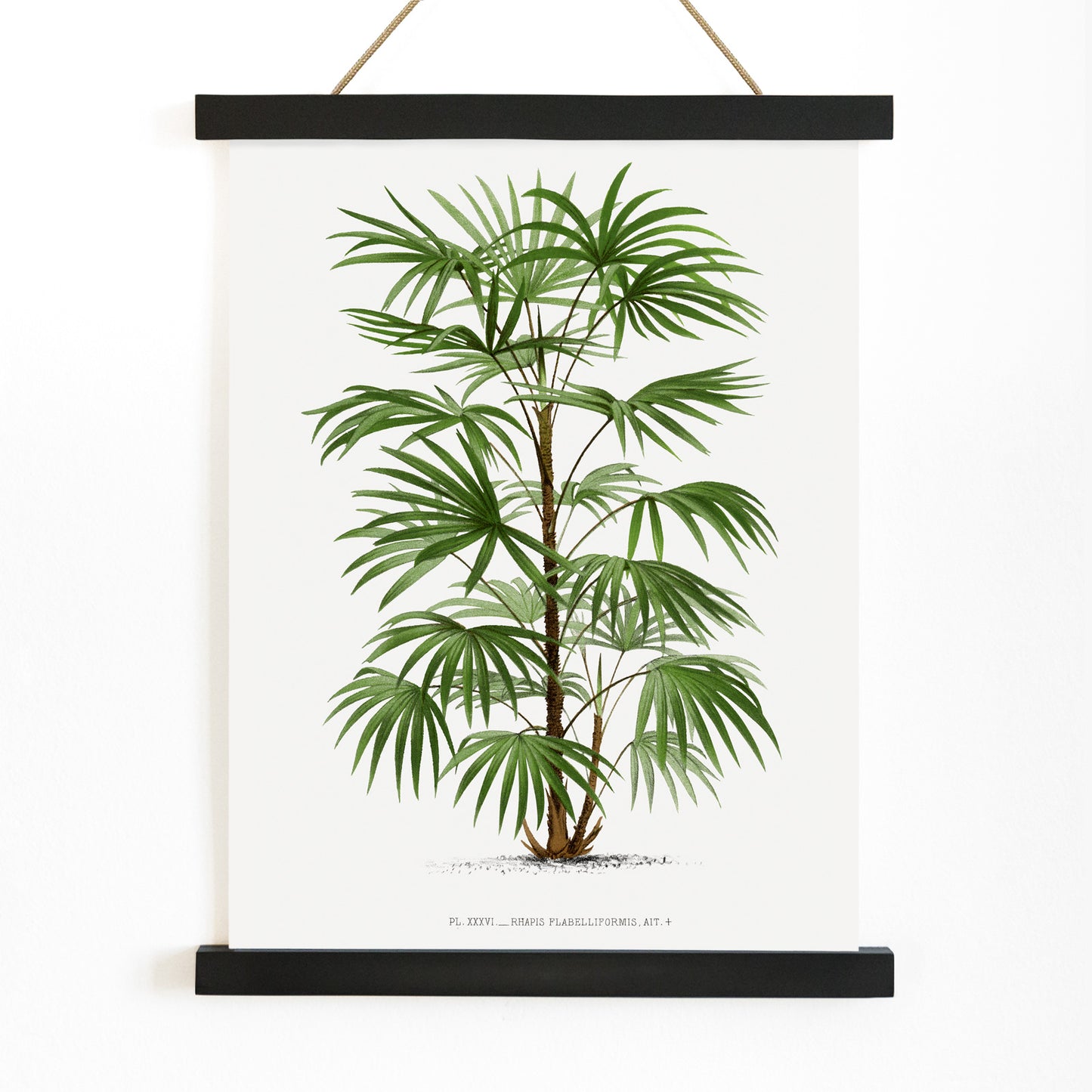
This illustration, Les Palmiers 2, was created during a time when palm trees symbolized both botanical advancement and the allure of distant lands. In the late 1800s, such prints served as essential references for horticulturists and plant collectors, offering a means to study and identify species outside their native environments.
Rather than capturing a fleeting scene, this vintage botanical print embodies the era’s commitment to careful observation and documentation, transforming the palm into both a scientific record and an object of visual delight.
Style & Characteristics
The artwork features a single palm tree rendered with precise linework and subtle shading, set against a clean, light background. The composition emphasizes the plant’s structure, with detailed fronds radiating from a slender trunk, creating a sense of order and clarity typical of nineteenth-century botanical plates.
Soft greens and gentle earth tones define the palette, lending the print a fresh and tranquil atmosphere. The restrained design and archival quality make it a timeless example of botanical art, ideal for those seeking a serene and scholarly accent.
In Interior Design
This palm botanical print brings a touch of natural elegance to living rooms, bedrooms, or workspaces, where its airy composition can brighten and calm the space. It harmonizes well with Scandinavian, coastal, or classic interiors, especially when paired with natural materials like wood, rattan, or linen.
For a cohesive look, combine it with other green-themed prints or display it within a gallery wall arrangement. Its understated beauty allows it to complement both minimalist and richly layered decor schemes.