




-

"Very nice Posters. The quality is amazing and we received it very quickly !"
-

"A shop to visit absolutely. Huge selection of posters. We spent more than an hour there !"
-

"Perfect to find gift. Price are very good. An they can frame and pack it on site"


About the Artist
Created by an anonymous artist, this 1971 protest poster reflects the spirit of activist printmaking that flourished during a period of intense social and political change in the United States. Such works were often produced collectively, prioritizing the power of the message over individual recognition. Posters like this were distributed rapidly, intended to be seen in public spaces and to inspire immediate action or solidarity.
Anonymity was frequently intentional, emphasizing the collective voice behind the movement rather than personal authorship. Today, this piece stands as a testament to the era’s grassroots activism and the enduring relevance of protest art in shaping public discourse.
The Artwork
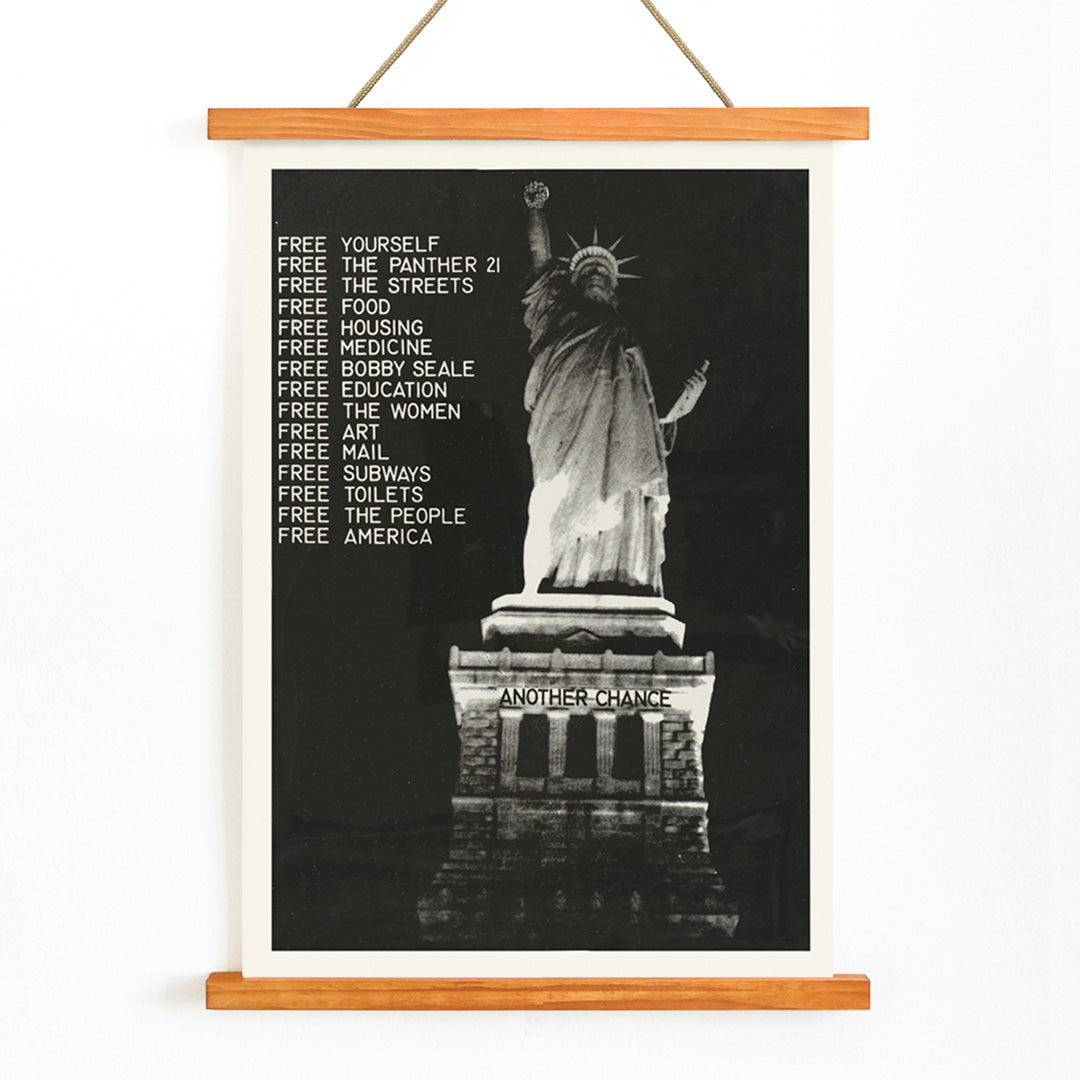
Free the Panther was created at a time when printed posters played a crucial role in mobilizing communities and articulating demands for justice. The phrase on the poster references solidarity with the Black Panther Party and the broader struggle for civil rights, echoing calls for freedom and equality in the face of systemic oppression.
By incorporating the Statue of Liberty, a symbol of American ideals, the artwork challenges viewers to reflect on the gap between national promises and lived realities. As a vintage poster, it preserves the urgency and clarity of protest culture, inviting ongoing engagement with its message.
Style & Characteristics
The design is rendered in stark black and white, leveraging high contrast to ensure immediate impact. The Statue of Liberty is depicted in a bold, graphic style, while the large, uppercase text Free the Panther dominates the composition, reminiscent of street typography used in activist materials.
Generous negative space and crisp edges contribute to a minimalist aesthetic, making it visually striking and easy to read from a distance. This approach aligns naturally with black and white posters and minimalist wall art, and the overall mood is direct and uncompromising, echoing the urgency of its historical context.
In Interior Design
This vintage poster adds intellectual depth and historical resonance to living rooms, offices, or creative studios. Its monochrome palette pairs well with modern materials like concrete, walnut, or black metal, and it complements collections of photography or editorial graphics.
For a curated interior, display it as a focal point within a gallery wall of civic or cultural prints, or let it stand alone for maximum impact. It also combines seamlessly with other vintage advertising posters for a cohesive, print-inspired display.