




-

"Very nice Posters. The quality is amazing and we received it very quickly !"
-

"A shop to visit absolutely. Huge selection of posters. We spent more than an hour there !"
-

"Perfect to find gift. Price are very good. An they can frame and pack it on site"


About the Artist
Francois Levaillant was a French naturalist and explorer whose pioneering bird studies helped shape European ornithology at the turn of the 19th century. Drawing from field expeditions and the era’s expanding collections, he introduced many exotic species to European audiences and emphasized both scientific accuracy and visual appeal in his work.
Levaillant’s influential publications made natural history more accessible, pairing detailed classification with striking illustrations. His legacy endures in the world of vintage bird prints, where his approach continues to inspire both scientific and decorative appreciation.
The Artwork
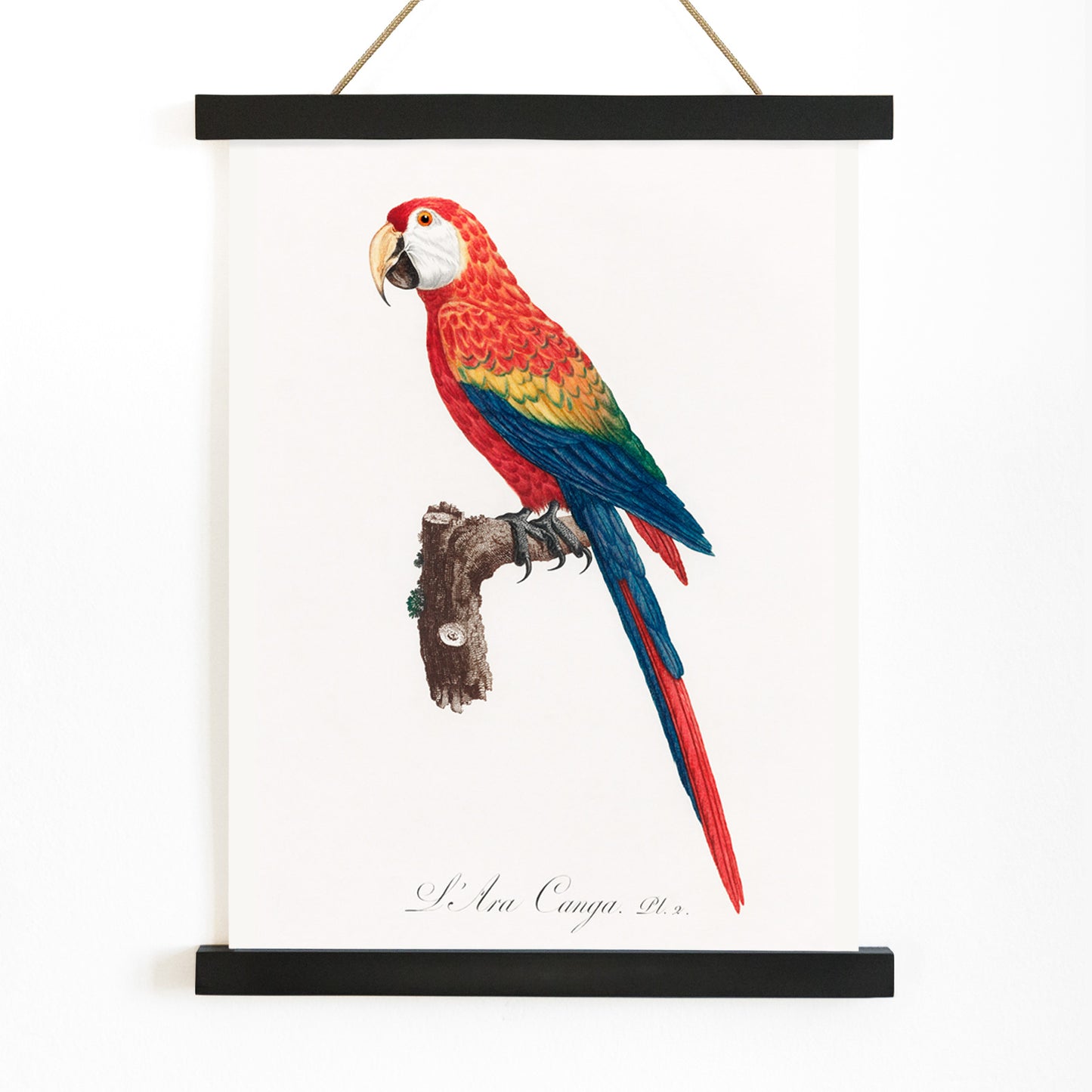
This Ara Canga print was created during a period when naturalists sought to document and share the diversity of global wildlife. Before the advent of photography, such illustrations served as essential references for scholars, collectors, and enthusiasts, allowing them to study and compare species from afar.
The depiction of the vibrant parrot reflects the European fascination with exotic animals, often featured in cabinets of curiosity and scientific collections. As a vintage print, it represents the intersection of exploration, scientific inquiry, and the enduring allure of the natural world.
Style & Characteristics
The artwork presents a single scarlet macaw in profile, perched on a slender branch. The bird’s plumage is rendered in vivid scarlet red, with striking blue wings and subtle yellow and green accents, all set against a pale, uncluttered background. Fine lines and gentle shading give the bird a lifelike presence without overwhelming detail.
The composition is balanced and orderly, with a sense of clarity and elegance characteristic of classic natural history illustration. The overall effect is both vibrant and refined, appealing to admirers of scientific illustration and those drawn to animal-themed art for the home.
In Interior Design
This vintage bird print introduces a sophisticated splash of color to living rooms, studies, or hallway gallery walls, especially against white or neutral backgrounds. It pairs beautifully with natural materials like walnut and rattan, and can serve as a focal point in both traditional and modern interiors.
For a cohesive look, consider echoing the artwork’s red or blue hues elsewhere in the space, or explore complementary pieces from frames and related natural history prints. This piece suits anyone seeking a refined vintage print with both scientific and decorative appeal.