




-

"Very nice Posters. The quality is amazing and we received it very quickly !"
-

"A shop to visit absolutely. Huge selection of posters. We spent more than an hour there !"
-

"Perfect to find gift. Price are very good. An they can frame and pack it on site"


About the Artist
Kobayashi Kiyochika was a Japanese printmaker active during the early Meiji era, renowned for revitalizing ukiyo-e by infusing it with modern perspectives on light and atmosphere. While much of his legacy centers on dramatic cityscapes, he also explored the quieter beauty of nature, capturing subtle seasonal changes. This 1880 work reflects the enduring Japanese appreciation for bird-and-flower subjects, a genre that celebrates the poetry of everyday life. Kiyochika’s contributions continue to inspire collectors of Japanese-inspired art and vintage prints.
His prints offer a refined alternative to more ornate decorative art, balancing restraint with a keen sense of seasonal detail.
The Artwork
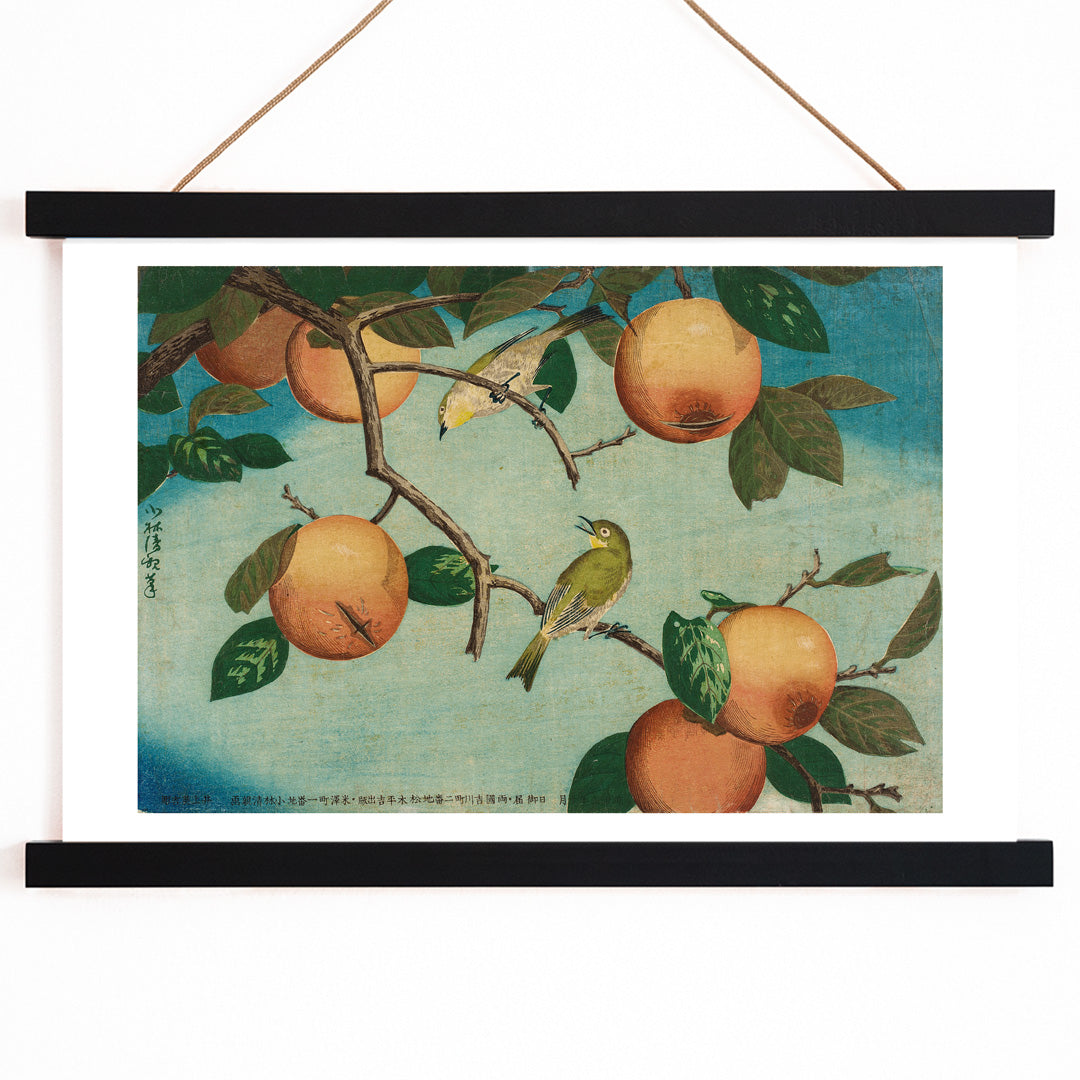
Persimmons and White-Eyes is rooted in the kachō-e tradition, where depictions of birds and plants evoke the rhythms of the seasons. The persimmons symbolize late autumn and abundance, while the lively white-eye birds capture the fleeting activity before winter’s arrival. Rather than telling grand stories, such scenes were cherished for their ability to remind viewers of nature’s cycles and the beauty found in everyday moments.
Produced in 1880, this woodblock print also reflects a time when such images were widely accessible, serving as both art and a gentle reflection of cultural values in daily life.
Style & Characteristics
The composition centers on a branch laden with round orange persimmons, where small white-eye birds perch and interact. Fine contour lines define the leaves, fruit, and birds, while subtle gradations of color suggest depth and soft illumination. The palette features warm orange persimmons contrasted with cool blue and fresh green foliage, creating a harmonious and balanced scene.
The overall mood is tranquil and intimate, characteristic of Japanese woodblock prints that blend decorative appeal with contemplative stillness, highlighted by the delicate presence of the birds.
In Interior Design
This vintage print is well-suited for display in kitchens, dining rooms, hallways, or reading nooks, where its seasonal imagery brings a sense of warmth without overwhelming the space. It pairs beautifully with pale woods, linen, and minimalist ceramics, fitting seamlessly into Japandi or modern interiors.
The orange hues complement terracotta and oak, while the blues and greens work well with sage, indigo, and off-white. For a curated look, consider pairing it with other animal prints or explore our selection of orange-toned posters for harmonious combinations.