




-

"Very nice Posters. The quality is amazing and we received it very quickly !"
-

"A shop to visit absolutely. Huge selection of posters. We spent more than an hour there !"
-

"Perfect to find gift. Price are very good. An they can frame and pack it on site"


About the Artist
The Art Institute of Chicago, a leading American museum, has played a pivotal role in presenting and interpreting modern art to the public. During the late 1960s and 1970s, museum posters became an important medium for cultural communication, blending graphic design with institutional prestige. This era saw museums embracing bold visual language to reach broader audiences, making exhibition posters collectible artifacts in their own right. The Art Institute's commitment to innovative design is evident in its approach to promoting major exhibitions, situating its posters among the most influential examples of classic art prints and museum-quality ephemera.
These posters not only announced significant events but also reflected the evolving relationship between art institutions and the urban public, capturing the spirit of a dynamic cultural moment.
The Artwork
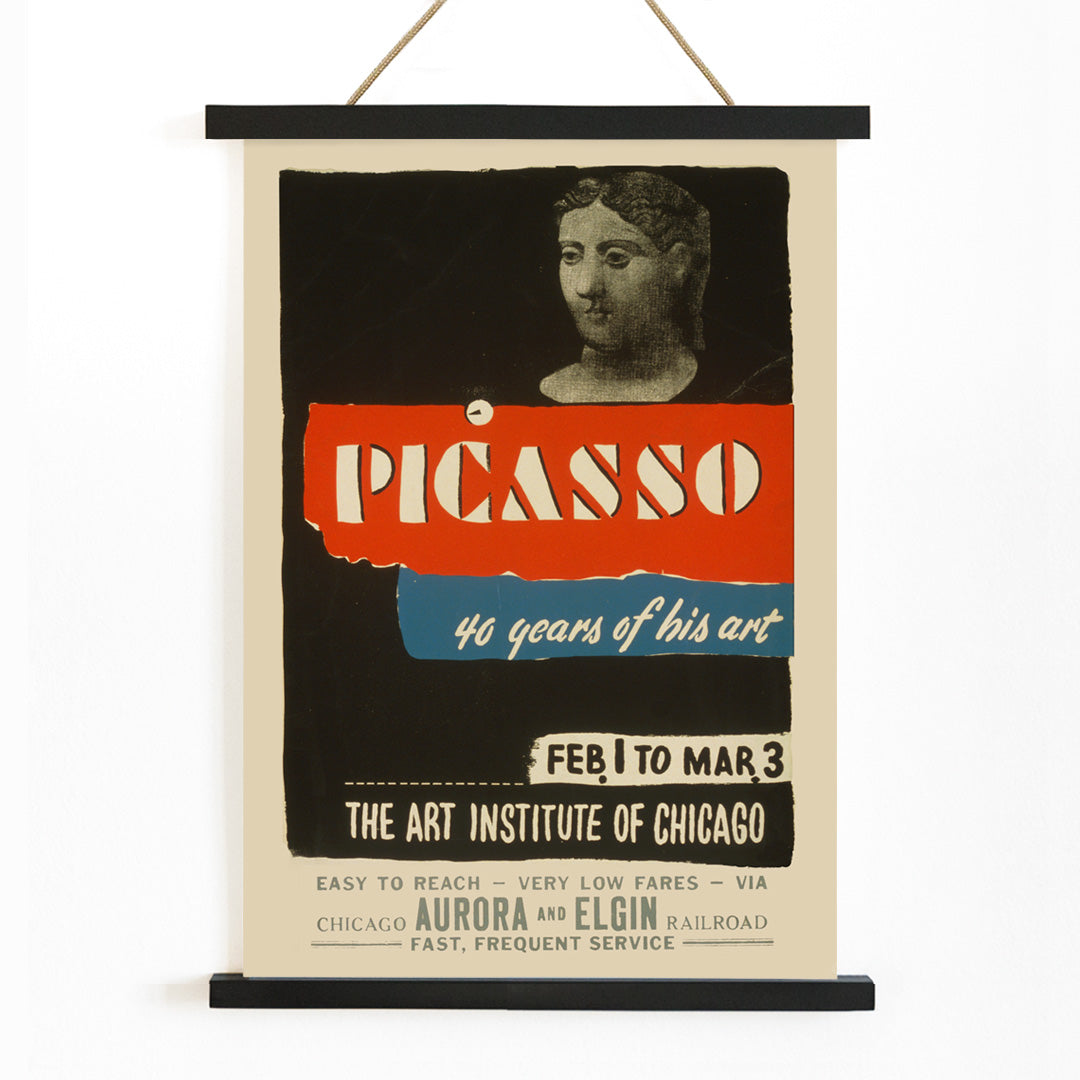
This 1970 exhibition poster was created to announce Picasso - 40 Years of His Art, a major retrospective at the Art Institute of Chicago. The exhibition celebrated the breadth of Picasso's creative evolution, highlighting his continual reinvention and impact on twentieth-century modernism. The poster served as both a public invitation and a visual summary of the artist's enduring influence, encapsulating the excitement surrounding a landmark museum event.
As a piece of exhibition ephemera, it offers insight into how institutions framed the narrative of modern art for a wide audience, making the history of avant-garde creativity accessible and memorable.
Style & Characteristics
The poster features a striking composition with bold, sans-serif typography and a central abstract figure rendered in vivid red and blue against a light background. The design emphasizes clarity and high contrast, ensuring visibility from a distance. The use of flat color fields and crisp lines gives the piece a distinctly graphic character, typical of late modernist poster design.
The overall mood is energetic and cosmopolitan, reflecting the sophisticated visual language of museum advertising from this period. Its aesthetic bridges the worlds of fine art and vintage advertising posters, making it both a historical document and a timeless design object.
In Interior Design
This vintage exhibition poster brings a sense of art history and modern design into any interior, whether displayed in a living room, office, or hallway. It pairs especially well with minimalist frames in black or natural wood, and can be combined with other works from famous artists for a curated gallery wall.
To highlight its bold color accents, consider echoing the red or blue in textiles or ceramics, while keeping surrounding tones neutral. The poster suits mid-century, contemporary, and minimalist spaces, offering a refined focal point for those who appreciate both art and design heritage.