




-

"Very nice Posters. The quality is amazing and we received it very quickly !"
-

"A shop to visit absolutely. Huge selection of posters. We spent more than an hour there !"
-

"Perfect to find gift. Price are very good. An they can frame and pack it on site"


About the Artist
Anselmus Boëtius de Boodt was a Flemish physician and naturalist active at the dawn of the seventeenth century. Serving as court physician to Emperor Rudolf II in Prague, he became renowned for his meticulous studies of minerals and plants. De Boodt's dedication to observation and documentation bridged the worlds of science and art, contributing significantly to early modern natural history.
The Artwork
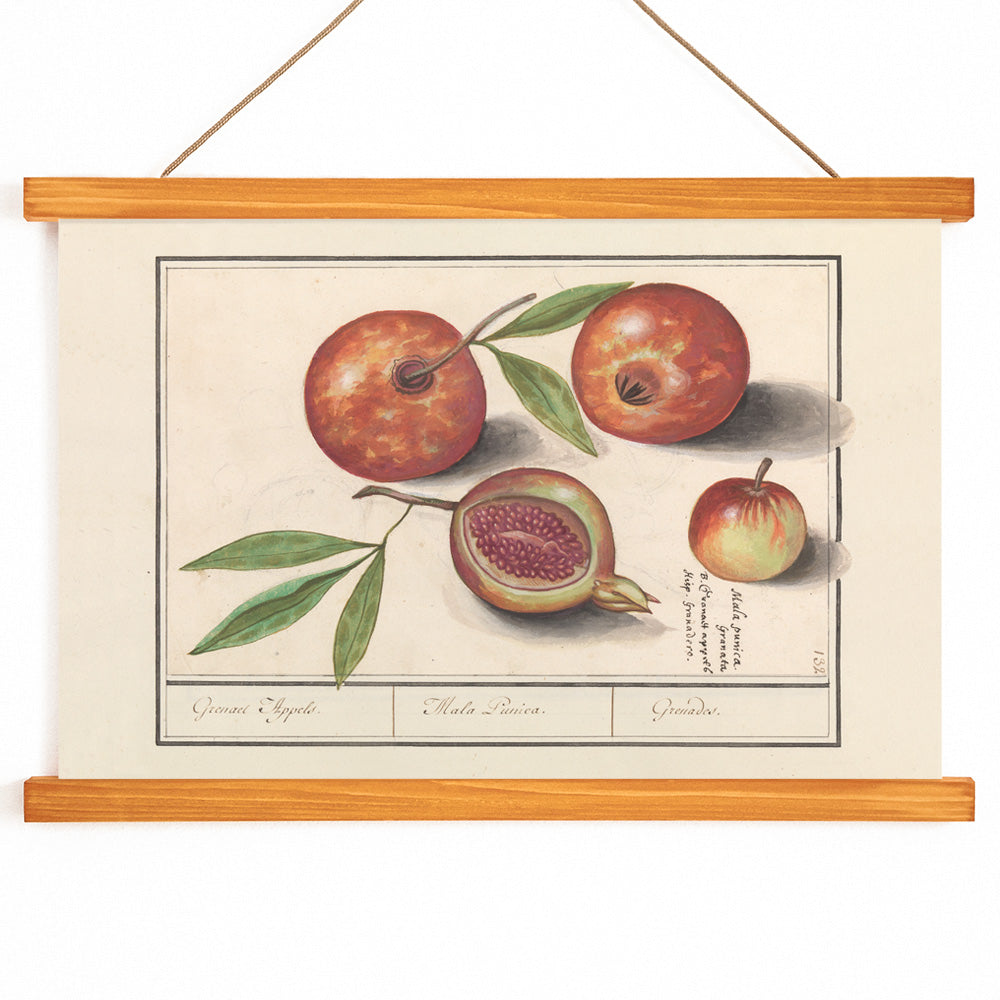
This illustration of a pomegranate was created during a period when botanical art played a vital role in cataloguing and sharing knowledge about the natural world. In 1609, such works were commissioned for scholarly collections and cabinets of curiosity, reflecting the era's fascination with classification and the beauty of rare specimens. The pomegranate, with its symbolic associations of abundance and renewal, was a favored subject among collectors and scholars alike.
Style & Characteristics
The artwork features a single pomegranate branch with glossy red fruit, some split to reveal seeds, and crisp green leaves, all set against an uncluttered, pale background. De Boodt’s careful linework and subtle watercolor shading capture the texture and sheen of the fruit, while the composition’s simplicity draws attention to botanical detail. The palette of deep reds, fresh greens, and soft beige evokes a sense of calm and understated richness, blending scientific precision with quiet elegance.
In Interior Design
This botanical print brings a cultivated, serene touch to kitchens, dining rooms, or studies, where its naturalistic style pairs well with light woods, linen, and vintage ceramics. It can be combined with other botanical wall art for a themed gallery, or mixed with kitchen prints and classic art posters to create a harmonious, nature-inspired interior. Accentuate its colors with sage greens and warm neutrals for a balanced look.