




-

"Very nice Posters. The quality is amazing and we received it very quickly !"
-

"A shop to visit absolutely. Huge selection of posters. We spent more than an hour there !"
-

"Perfect to find gift. Price are very good. An they can frame and pack it on site"


About the Artist
Gustav Klimt was a central figure in Vienna’s turn-of-the-century art scene and a founder of the Vienna Secession. Renowned for his innovative approach to portraiture, Klimt combined symbolism and refined draftsmanship to challenge traditional academic conventions. His early works, including family portraits, reveal his deep interest in capturing psychological nuance and the evolving role of portraiture in modern society.
For those interested in the evolution of European portraiture, Klimt’s work is well represented in our famous artists prints and classic art collections, where his blend of intimacy and design continues to inspire collectors.
The Artwork
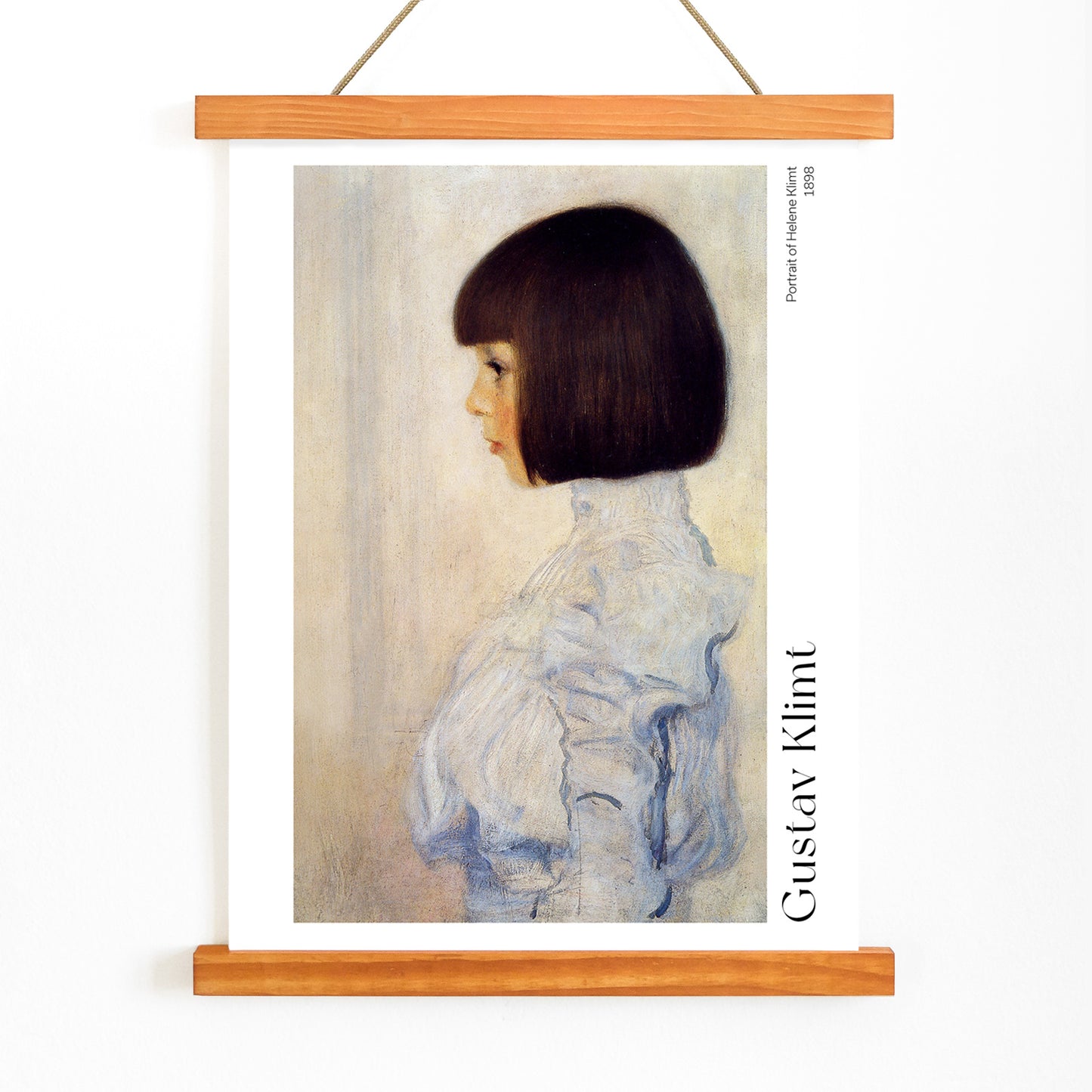
Created in 1898, this portrait of Helene—Klimt’s niece—reflects a period when the artist was exploring the emotional depth of his sitters. Rather than a formal or public depiction, the drawing captures a private, introspective moment, emblematic of the changing attitudes toward individuality and family in fin-de-siècle Vienna. The work stands as a testament to Klimt’s ability to find meaning in everyday relationships and to elevate personal subjects within the fine art tradition.
This piece also illustrates Klimt’s studio practice, where close observation and subtle shifts in posture or expression were used to reveal character and mood, marking a shift from conventional portraiture to a more psychological approach.
Style & Characteristics
The portrait features a young woman in profile, rendered with delicate graphite lines and gentle shading that define her features and hair. The background is left light and uncluttered, ensuring the viewer’s attention remains on the sitter’s face and the nuanced play of light and shadow.
The restrained palette of warm beige paper and soft black to brown marks creates an understated elegance. The overall effect is calm and contemplative, making this vintage art print a subtle yet expressive addition to interiors, especially among beige toned prints or minimalist decor schemes.
In Interior Design
This portrait’s quiet presence makes it ideal for intimate spaces such as bedrooms, reading nooks, or hallways. Its gentle lines and neutral tones harmonize with both modern and classic interiors, from Scandinavian minimalism to traditional settings with natural materials.
Pairing it with soft neutrals, deep browns, or black accents will echo the drawing’s palette. For a cohesive display, consider a slim black or light wood frame, and explore our frames collection for presentation ideas that enhance its refined character.