




-

"Very nice Posters. The quality is amazing and we received it very quickly !"
-

"A shop to visit absolutely. Huge selection of posters. We spent more than an hour there !"
-

"Perfect to find gift. Price are very good. An they can frame and pack it on site"


About the Artist
Albert O. Waddell is known not as a traditional artist but as an inventor, with his legacy preserved through the precise language of United States patent drawings. Patent illustrations like this were created according to strict technical standards, ensuring that inventions could be clearly understood, evaluated, and legally protected.
This work stands at the intersection of design history and everyday ingenuity. For those fascinated by the evolution of functional objects, it offers a glimpse into the inventive spirit of the late 1960s, when new forms of recreation inspired creative engineering solutions.
The Artwork
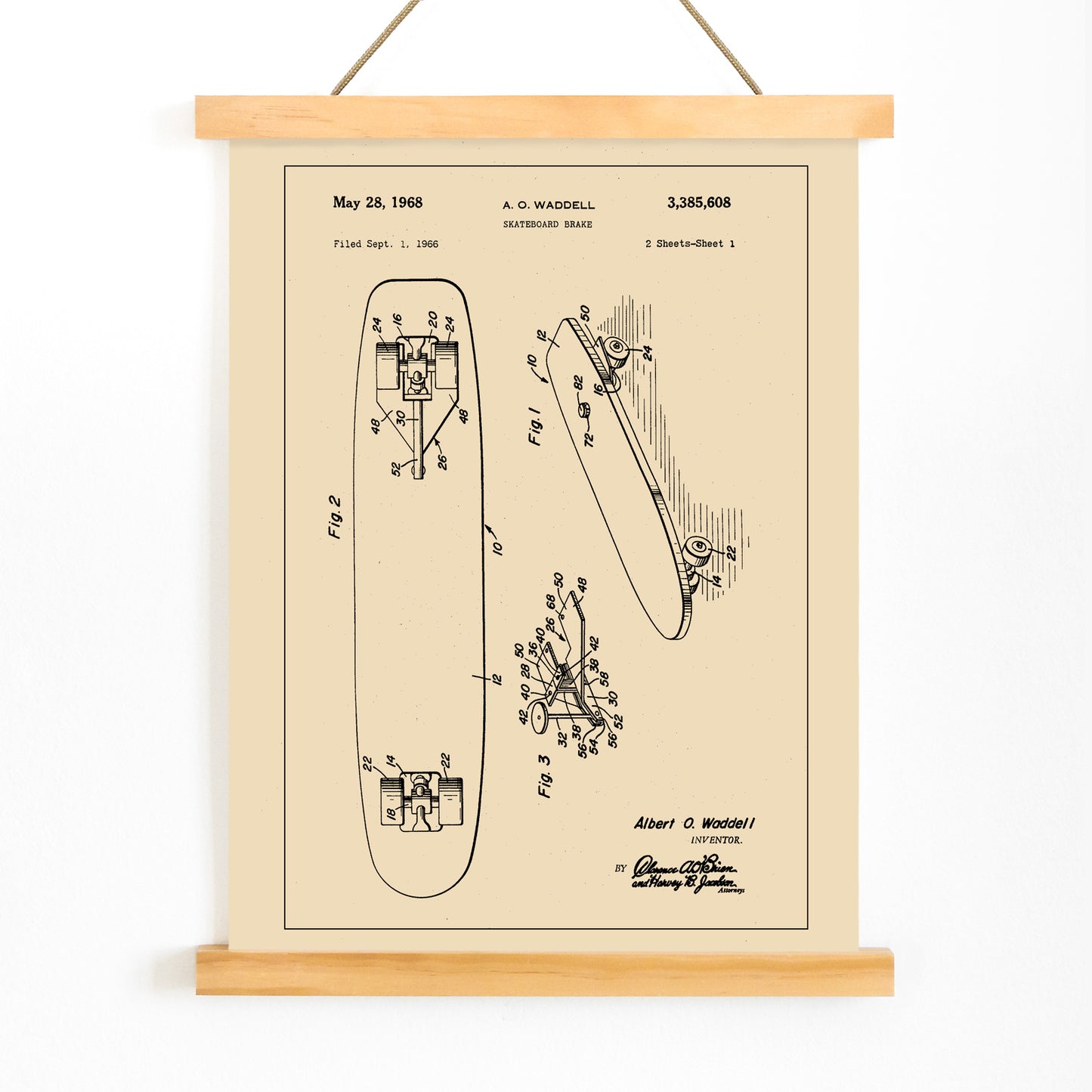
Issued in 1969, this Skate Board Brake Patent reflects a pivotal moment in the early development of modern skateboarding. As the sport gained popularity, inventors sought ways to improve safety and control, leading to innovations like this brake mechanism. The patent drawing was created to document and explain the device for official review, serving both as technical evidence and as a record of the era's inventive energy.
Today, it stands as a historical document that captures the intersection of youth culture and engineering, making it a compelling vintage print for enthusiasts of design and skate history. For more inventive visuals, explore our science and surf collections.
Style & Characteristics
The artwork features clean, technical linework rendered in black ink on a softly aged, beige-toned background. Multiple diagram views display the brake mechanism from different angles, each component meticulously labeled for clarity. The composition is spacious and orderly, with ample margins that evoke the look of archival patent documents.
The overall mood is precise and quietly nostalgic, reminiscent of mid-century engineering blueprints. This vintage print pairs naturally with black and white posters and other minimalist decor, offering a subtle nod to the aesthetics of invention and technical drawing.
In Interior Design
This patent print is well suited to home offices, creative studios, or teen rooms, where a sense of curiosity and innovation is welcome. Its minimalist design complements industrial, modern, and Scandinavian interiors, adding character without overwhelming the space.
Combine it with pale woods, metal accents, or memorabilia for a thoughtful, design-driven atmosphere. It also works seamlessly alongside surf and skate culture prints, helping to create an interior narrative centered on movement, creativity, and invention.