




-

"Very nice Posters. The quality is amazing and we received it very quickly !"
-

"A shop to visit absolutely. Huge selection of posters. We spent more than an hour there !"
-

"Perfect to find gift. Price are very good. An they can frame and pack it on site"


About the Artist
Albert I of Monaco was a pioneering ruler and a devoted patron of marine science in the late 19th century. His commitment to oceanography led to the founding of research institutions and the sponsorship of expeditions that advanced the study of marine life. Through his support, detailed visual records like this scientific plate became essential tools for sharing discoveries and promoting public understanding of the ocean's diversity.
This print reflects the era's spirit of exploration and documentation, when illustrated plates served as both scientific evidence and sources of fascination. For more on this theme, see our sea and ocean posters and science art prints.
The Artwork
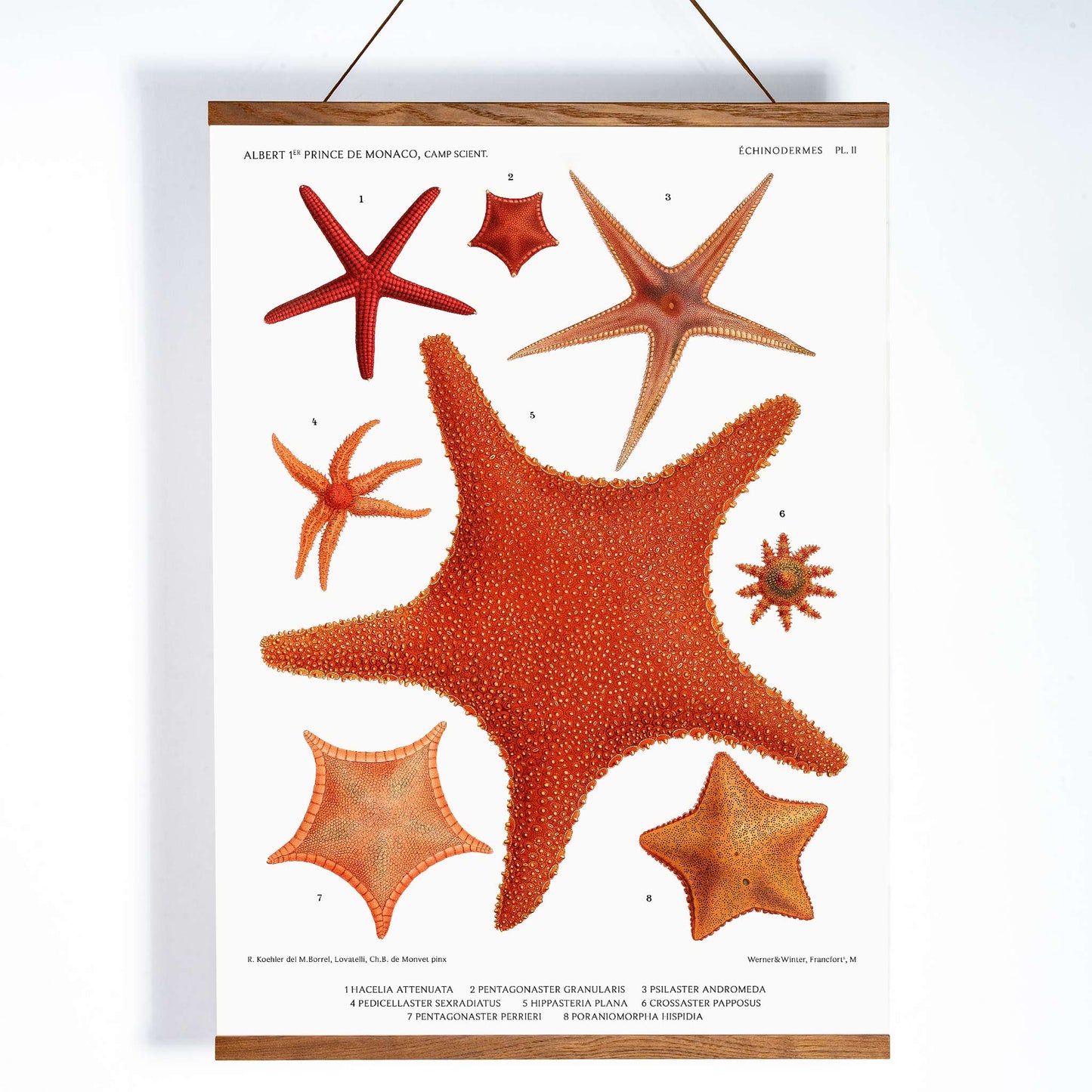
Produced in 1892, this starfish plate emerged from a period when cataloguing marine species was central to scientific progress. Such illustrations were created to standardize knowledge, allowing researchers and naturalists to compare and identify species with accuracy. The focus on starfish highlights the intrigue these creatures held for scientists, as their unusual forms challenged conventional ideas about animal structure and adaptation.
This work embodies the intersection of scientific inquiry and visual artistry, capturing a moment when the mysteries of the deep sea were being systematically unveiled for the first time.
Style & Characteristics
The plate presents several starfish specimens, each carefully isolated against a white background and spaced for direct comparison. Fine outlines and subtle shading bring out the textures, spines, and unique shapes of each starfish, emphasizing their natural symmetry and variety.
The color palette features warm coral reds, oranges, and soft creams, lending the print a vibrant yet archival feel. The overall mood is calm and precise, balancing decorative qualities with the clarity expected of vintage scientific illustration. This makes it especially appealing to collectors of natural history art.
In Interior Design
This starfish scientific print brings a refined coastal touch to living rooms, bathrooms, or hallways, where its orderly composition adds visual interest without overwhelming the space. It is equally at home in a study or reading nook, where it can inspire curiosity and appreciation for natural history.
Pair it with pale woods, white mats, or stone surfaces for a classic look, or contrast with deep blues and greens for a more dramatic effect. It also integrates beautifully with curated animal wall art and gallery walls featuring maps, shells, or other ocean-inspired prints.